
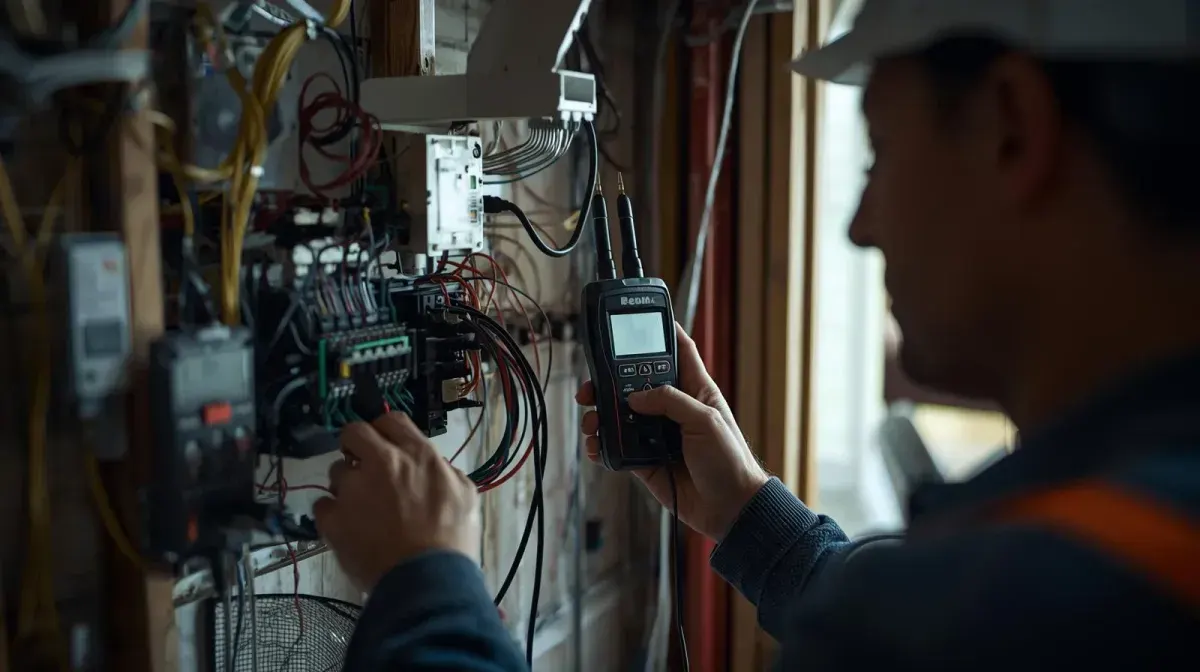
Electrical defects are not always visible. They can hide behind walls, inside ceiling cavities, and within switchboards for years before they cause a serious incident. Many homeowners only discover wiring problems after a short circuit, a power outage, or worse. A qualified inspector knows where to look and what to look for, checking everything from switchboard condition and circuit protection to earthing systems, cable runs, and power point installations. For a complete overview, see our guide to building defect investigations.
Why Electrical Defect Inspections Matter
Faulty electrical systems pose serious risks to people and property. According to the Electrical Safety Office Queensland, electrical incidents cause an average of 15 deaths and over 300 injuries each year in Australia. These figures do not include the hundreds of house fires caused by electrical faults annually.
- Electrical fires can start inside walls where they are not detected until significant damage has occurred
- Faulty wiring increases the risk of electric shock, particularly in wet areas like bathrooms, kitchens, and laundries
- Non-compliant electrical work can void your home insurance if a fire or injury results from it
- Defective installations reduce the efficiency and lifespan of appliances and electrical equipment
- Buyers who skip electrical checks may inherit costly and dangerous problems
Unlicensed electrical work is illegal in every Australian state and territory. If defects are found that resulted from unlicensed work, the homeowner may be liable for rectification costs and could face penalties from the relevant state regulator.
An electrical defect inspection gives you a clear picture of the safety and compliance status of a property's wiring and electrical infrastructure. For buyers, it provides bargaining power. For homeowners, it provides peace of mind.
What Does an Electrical Defect Inspection Cover?
A thorough electrical defect inspection assesses all accessible electrical components in a property. The scope will depend on whether the inspection is part of a broader building inspection or a standalone assessment, but it generally covers the following areas.
Important
A building inspector assesses visible electrical defects and installation quality as part of a property inspection. For detailed testing of circuits, insulation resistance, and load capacity, a licensed electrician should be engaged to carry out a full electrical compliance audit.
Common Electrical Defects in Australian Homes
Certain electrical defects appear frequently in Australian properties, regardless of age. Some are cosmetic or minor, while others present immediate safety risks.
| Defect | Risk Level | Description |
|---|---|---|
| Exposed or Damaged Wiring | High | Cables with cracked, perished, or missing insulation that expose live conductors. Common in roof spaces and subfloor areas. |
| No Safety Switch (RCD) | High | Properties without Residual Current Devices on power and lighting circuits. RCDs are mandatory in most states for all new work and renovations. |
| Overloaded Circuits | High | Too many appliances or power points running on a single circuit, often seen in older homes that have not been upgraded. |
| Double-Adaptor Dependency | Medium | Indicates insufficient power points, leading to overloading risks. A sign the electrical layout needs upgrading. |
| Incorrect Bathroom Installations | High | Power points or light switches installed too close to water sources without appropriate IP-rated protection. |
| Outdated Switchboard | Medium to High | Old ceramic fuse boards with rewirable fuses instead of modern circuit breakers. Common in homes built before the 1980s. |
| DIY or Unlicensed Work | High | Electrical modifications made without a licence or certificate of compliance. Often identified by non-standard cable colours, poor junction connections, and missing documentation. |
| Missing or Non-Compliant Smoke Alarms | Medium | Smoke alarms that are expired, battery-only when hardwired is required, or not interconnected where legislation demands it. |
Electrical Defects in New Builds vs Older Properties
Electrical defects differ significantly between newly constructed homes and older properties. Understanding these differences helps you know what to watch for at each stage of a property's life.
New Build Electrical Defects
Even brand-new homes can have electrical defects. These are typically caused by rushed construction timelines, subcontractor errors, or inadequate quality control during the build.
- Incorrectly wired power points or light switches that do not function as intended
- Missing or poorly installed RCDs on circuits that require protection
- Switchboard labelling errors that make it difficult to identify circuits in an emergency
- Cables pinched or damaged during construction, creating hidden fire risks inside walls
- Smoke alarms not interconnected or positioned incorrectly according to state legislation
- External lights, garden power points, or pool equipment not installed to outdoor electrical standards
New home buyers in most states have warranty protections under home building legislation. In NSW, the Home Building Act 1989 provides a statutory warranty period of two years for minor defects and six years for major defects. Electrical faults that pose a safety risk are generally classified as major defects.
Older Property Electrical Defects
Older homes, particularly those built before the 1990s, often have electrical systems that were compliant at the time of installation but no longer meet current standards.
- Aluminium wiring (used in some 1960s to 1970s homes) that is prone to overheating at connections
- VIR (Vulcanised India Rubber) insulated wiring that has deteriorated and become brittle
- Old ceramic fuse boards with no circuit breakers or RCDs
- Two-pin power points without an earth connection
- Lead-sheathed cables in pre-1960s properties that pose both electrical and health risks
- Wiring that has been modified over decades without a certificate of compliance for each stage of work
Australian Standards and Regulations
Electrical work in Australia is governed by a combination of national standards and state-based legislation. The two most relevant standards for residential electrical inspections are:
AS/NZS 3000
The Australian/New Zealand Wiring Rules. This is the primary standard covering the design, construction, and verification of electrical installations in all buildings.
AS/NZS 3018
Electrical installations for domestic premises. Provides specific requirements for wiring in residential properties.
NCC
The National Construction Code sets minimum performance requirements for all building work in Australia, including electrical installations.
AS 1670.1
Fire detection, warning, control, and intercom systems. Covers smoke alarm requirements in residential buildings.
Each state and territory also has its own electrical safety legislation and licensing requirements.
| State | Regulator | Key Legislation |
|---|---|---|
| NSW | NSW Fair Trading | Home Building Act 1989, Electricity Supply Act 1995 |
| VIC | Energy Safe Victoria (ESV) | Electricity Safety Act 1998, Domestic Building Contracts Act 1995 |
| QLD | Electrical Safety Office (ESO), QBCC | Electrical Safety Act 2002, Queensland Building and Construction Commission Act 1991 |
| SA | Office of the Technical Regulator (OTR) | Electricity Act 1996, Building Work Contractors Act 1995 |
| ACT | Access Canberra | Electricity Safety Act 1971, Building Act 2004 |
Tip
When buying a property, always ask the seller or agent for certificates of compliance for any electrical work carried out on the property. This documentation confirms the work was completed by a licensed electrician and meets the relevant Australian standards.
The Inspection Process Step by Step
Understanding what happens during an electrical defect inspection helps you prepare and know what to expect.
Pre-inspection briefing
The inspector discusses the property type, age, known issues, and your specific concerns. If the inspection is part of a pre-purchase assessment, the inspector will note the scope of accessible areas.
Switchboard assessment
The inspector examines the main switchboard for condition, correct labelling, presence of RCDs, circuit breaker ratings, and signs of overheating or arcing. Older ceramic fuse boards are flagged for upgrade.
Internal electrical check
Each room is assessed for power point condition, light switch operation, fitting security, and evidence of non-compliant or DIY work. Wet areas receive particular attention for compliance with AS/NZS 3000 wet area zones.
Roof space and subfloor inspection
Where accessible, the inspector checks cable runs for damage, correct support, insulation condition, and clearance from insulation material and heat sources.
External electrical assessment
Outdoor power points, lighting, pool and spa equipment, shed wiring, and any external electrical connections are checked for weatherproofing, earthing, and compliance.
Smoke alarm check
The inspector verifies smoke alarm locations, type (photoelectric, ionisation, or combined), interconnection status, expiry dates, and compliance with current state legislation.
Report and recommendations
A written report is produced detailing all identified defects, their severity, photos of each issue, and recommended actions. Defects are typically categorised as safety hazards, non-compliant items, or maintenance concerns.
What Happens After Defects Are Found
When an electrical defect inspection identifies problems, the next steps depend on the severity of the defects and whether the property is a new build, an existing home, or a property being purchased.
For Pre-Purchase Inspections
- Use the defect report as a negotiation tool to request the seller fix the issues before settlement or reduce the purchase price accordingly
- Obtain quotes from licensed electricians for the cost of rectification works
- Factor the repair costs into your overall budget when deciding whether to proceed with the purchase
- For major safety defects, consider making the sale conditional on rectification with a certificate of compliance
For New Builds Under Warranty
- Report all identified defects to the builder in writing within the applicable warranty period
- The builder is legally required to rectify defects that fall within the statutory warranty under state home building legislation
- Keep copies of all correspondence, inspection reports, and rectification records
- If the builder refuses to fix the defects, lodge a complaint with the relevant state building authority such as NSW Fair Trading or the QBCC
For Existing Homeowners
- Engage a licensed electrician to rectify any identified safety hazards as a priority
- Address non-compliant items before they cause problems with insurance claims or property sales
- Schedule regular inspections every five to ten years, or more frequently for older properties
Any electrical defect classified as a safety hazard should be addressed immediately. Do not attempt to fix electrical issues yourself. All electrical repair and installation work in Australia must be carried out by a licensed electrician who will provide a certificate of compliance upon completion.
When Should You Get an Electrical Defect Inspection?
Costs of Electrical Defect Inspections
The cost of an electrical defect inspection in Australia varies based on the property size, location, and scope of the assessment. When included as part of a comprehensive building inspection, the electrical assessment is typically covered within the overall fee.
| Service | Typical Cost (AUD) | What Is Included |
|---|---|---|
| Standard Building Inspection (includes electrical check) | $400 to $800 | Visual assessment of accessible electrical components, switchboard check, smoke alarm review, and identification of visible defects. |
| Standalone Electrical Safety Inspection | $200 to $500 | Focused inspection of switchboard, circuits, RCDs, earthing, and wiring by a licensed electrician. Includes testing and a compliance certificate. |
| New Build Defect Inspection (includes electrical) | $500 to $1,200 | Comprehensive assessment of all building elements including electrical, plumbing, structural, and finishing quality. Designed for new home handover. |
Tip
The cost of an electrical inspection is small compared to the cost of repairing fire damage or replacing a non-compliant switchboard. Spending a few hundred dollars on an inspection can save thousands in unexpected repairs and, more importantly, prevent injuries or fatalities.
Key Takeaways
- Electrical defect inspections identify unsafe wiring, faulty installations, and non-compliant work that can cause fires, electric shocks, and insurance issues.
- All electrical work in Australia must comply with AS/NZS 3000 (the Wiring Rules) and the National Construction Code.
- Common defects include exposed wiring, missing RCDs, overloaded circuits, outdated switchboards, and unlicensed DIY work.
- Both new builds and older properties can have electrical defects, though the types of faults differ significantly.
- A pre-purchase building inspection should always include an assessment of the electrical system, especially in properties built before the 1990s.
- Electrical safety hazards must be fixed by a licensed electrician who provides a certificate of compliance upon completion.
- Homeowners should schedule electrical inspections every five to ten years, and immediately if warning signs like flickering lights or tripping circuits appear.
- Certificates of compliance for electrical work are important documents that should be requested and retained for every property.
Frequently Asked Questions
What is an electrical defect inspection?
An electrical defect inspection is a professional assessment of a property's electrical systems, including the switchboard, wiring, power points, safety switches, earthing, and smoke alarms. The purpose is to identify defects, safety hazards, and non-compliant installations. It can be conducted as a standalone inspection by a licensed electrician or as part of a broader building inspection by a qualified building inspector.
How often should I get an electrical inspection on my home?
For a typical Australian home, an electrical inspection is recommended every five to ten years. However, older homes, particularly those built before the 1990s, should be inspected more frequently. You should also arrange an inspection after a major storm, flood, renovation, or if you notice any warning signs such as flickering lights, frequently tripping circuit breakers, or burning smells near power points.
What are the most common electrical defects found in Australian homes?
The most common defects include exposed or damaged wiring (especially in roof spaces and subfloor areas), missing or non-functional Residual Current Devices (RCDs), overloaded circuits, outdated ceramic fuse switchboards, incorrectly installed bathroom electrical fittings, DIY or unlicensed electrical work, and non-compliant smoke alarms. Many of these defects are found in properties of all ages.
Is an electrical check included in a standard building inspection?
Yes. A standard pre-purchase building inspection typically includes a visual assessment of accessible electrical components. This covers the switchboard, power points, light switches, smoke alarms, and any visible wiring. However, a building inspector conducts a visual check only. For in-depth circuit testing, insulation resistance testing, and full compliance certification, a licensed electrician should be separately engaged.
What is an RCD and why is it important?
A Residual Current Device (RCD), commonly called a safety switch, monitors the flow of electricity through a circuit and instantly shuts off power if it detects a fault that could cause electric shock. RCDs are mandatory in all Australian states for new electrical installations and renovations. They are one of the most effective protections against electrocution and should be installed on all power and lighting circuits.
Can I do my own electrical work in Australia?
No. In every Australian state and territory, electrical work must be carried out by a licensed electrician. DIY electrical work is illegal and extremely dangerous. Unlicensed work can result in fines, void your home insurance, and create serious safety hazards. The only electrical tasks a homeowner can legally perform are changing a light bulb and resetting a circuit breaker or RCD.
What should I do if my home has an old ceramic fuse switchboard?
If your home still has a ceramic fuse switchboard with rewirable fuses, you should have it assessed by a licensed electrician and consider upgrading to a modern switchboard with circuit breakers and RCDs. Old ceramic fuse boards do not provide the same level of protection as modern switchboards and may not comply with current standards. Upgrading typically costs between $1,500 and $3,000 depending on the complexity of the installation.
How much does an electrical defect inspection cost in Australia?
When included as part of a comprehensive building inspection, the electrical assessment is covered within the total fee, which typically ranges from $400 to $800 depending on property size and location. A standalone electrical safety inspection by a licensed electrician usually costs between $200 and $500. New build defect inspections that include a full electrical assessment can range from $500 to $1,200.
Will electrical defects affect my home insurance?
Yes. If a fire or injury is caused by known electrical defects or unlicensed electrical work, your insurance claim may be denied. Insurers expect homeowners to maintain their property's electrical systems to a safe standard. Having a current electrical inspection report and certificates of compliance for any work done on the property supports your position in the event of a claim.
What are the warning signs of electrical problems in a home?
Common warning signs include flickering or dimming lights, frequently tripping circuit breakers or blowing fuses, a burning smell near power points or the switchboard, discoloured or warm power point covers, buzzing or crackling sounds from switches or power points, and electric shocks when touching appliances. If you notice any of these signs, stop using the affected circuit and contact a licensed electrician immediately.
What electrical standards apply to residential properties in Australia?
The primary standard is AS/NZS 3000, known as the Australian/New Zealand Wiring Rules, which covers the design, construction, and verification of all electrical installations. AS/NZS 3018 provides additional requirements specific to domestic electrical installations. The National Construction Code (NCC) sets the minimum performance standards for building work, and AS 1670.1 covers smoke alarm requirements. Each state also has its own electrical safety legislation enforced by the relevant regulator.
Are smoke alarms part of an electrical defect inspection?
Yes. A thorough electrical defect inspection includes checking smoke alarm locations, type (photoelectric is now required in most states), interconnection status, expiry dates, and compliance with current state legislation. Smoke alarm requirements have changed significantly in recent years, with Queensland, South Australia, and Western Australia now requiring hardwired, interconnected photoelectric alarms in all homes being sold, leased, or built.
References and Resources
- AS/NZS 3000 Wiring Rules - Standards Australia - The primary Australian standard for electrical installations
- Energy Safe Victoria - Electrical Safety - Victorian electrical safety regulator
- NSW Fair Trading - Home Building - NSW home building legislation and defect warranty information
- Fire and Rescue NSW - Fire Safety - Residential fire cause statistics and prevention
Related Articles

What Does a Building Inspection Cover?
Building inspections serve as a critical investment safeguard, examining structural integrity, electrical systems, plumbing, and more before property purchase.
Why a Property Defect Inspection Is Important for Buyers
Property defect inspections examine structural integrity, safety hazards, and compliance issues. Learn why they are essential for Australian property buyers.
A Comprehensive Guide to House Inspections
House inspections are detailed professional assessments evaluating structural integrity, safety systems, and component functionality. Learn everything you need to know.
Concerned about the electrical safety of a property you are buying, building, or living in? Owner Inspections provides detailed building inspection reports that include a thorough assessment of electrical systems, switchboards, wiring, and safety compliance. Our licensed inspectors identify defects others miss. Get a quote today or call us on 1300 471 805.