

Buying an apartment is one of the largest financial decisions most Australians will make. The pre-settlement inspection is your last opportunity to check that everything is right before the keys change hands. Whether you are purchasing a brand-new off-the-plan unit or a resale apartment, this inspection protects your investment by catching problems that could cost thousands to fix after settlement.
Why a Pre-Settlement Inspection Matters
A well-executed pre-settlement inspection gives buyers confidence that their apartment is ready for occupation. Here is why it matters:
- Verifying property condition: Confirms the apartment is delivered as per the contract terms and meets agreed quality standards.
- Identifying defects early: Detects structural or finishing issues that may need rectification before finalising the purchase.
- Confirming compliance: Checks that all agreed repairs and installations have been completed correctly.
- Preventing future expenses: Catches problems before settlement so they can be addressed at the seller's or developer's cost.
- Protecting buyer rights: Gives buyers documented evidence to request fixes or financial adjustments if issues are found.
For more on common issues at this stage, see our guide to common issues in pre-settlement inspections.
When and How to Conduct the Inspection
Ideal Timing
The best time to conduct a pre-settlement inspection is a few days before the final settlement date. This allows enough time for any necessary repairs while making sure the property is ready for move-in. Inspecting too early might mean missing last-minute work, while scheduling too late can limit the time available for corrections.
QWho Should Be Present?
- Buyer: To personally verify the condition and confirm that expectations are met.
- Real estate agent: To provide documentation and contract details for verification.
- Independent inspector: To offer a professional, unbiased assessment covering all aspects of the apartment.
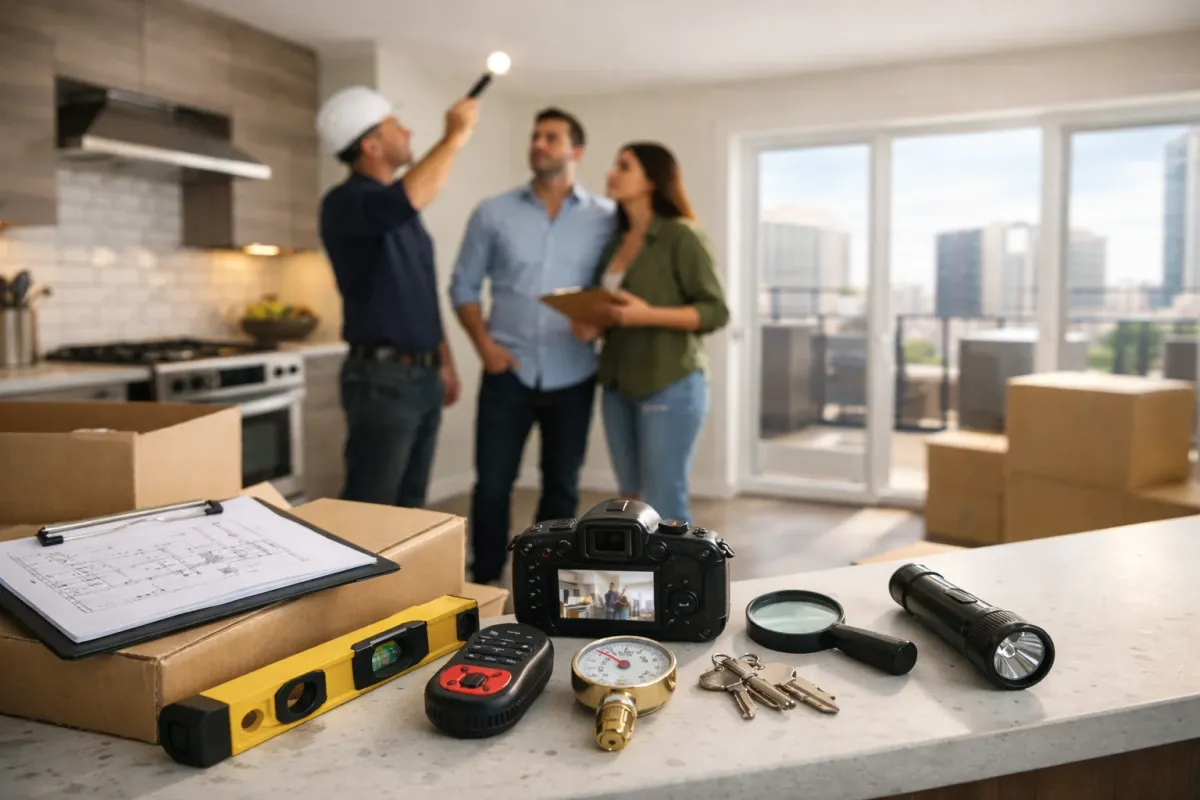
Tools Needed for the Inspection
Comprehensive Pre-Settlement Inspection Checklist
Structural and Finishing Inspections
Plumbing and Electrical Checks
Common Areas and External Features
Common Defects Found in Apartment Inspections
| Common Issues | Severity | |
|---|---|---|
| Paint and Plaster | Uneven application, touch-up marks, nail pops, cracking | Cosmetic, but may indicate rushed finishing |
| Tiling | Lippage, cracked tiles, poor grouting, hollow tiles | Can be cosmetic or indicate waterproofing risk |
| Doors and Windows | Misaligned frames, faulty locks, scratched glass | Security and weather sealing concern |
| Plumbing | Slow drainage, leaking taps, low water pressure | Can cause water damage if not addressed |
| Waterproofing | Failed membrane, water ingress at balconies or wet areas | Structural risk requiring immediate rectification |
For a detailed look at apartment-specific defects, read our article on common defects in off-the-plan apartments.
Reporting and Addressing Issues
Notifying the Seller or Developer
If defects or incomplete work are identified during the inspection, buyers should:
Document every issue
Take clear photos and write detailed descriptions of each defect, noting the exact location within the apartment.
Formally notify the seller or developer
Submit a written list of all defects, referencing the relevant contract clauses and requesting rectification before settlement.
Set a timeline for repairs
Agree on a reasonable timeframe for the developer or seller to complete repairs, ideally before the settlement date.
Reinspect after repairs
Conduct a follow-up inspection to confirm all issues have been properly addressed before finalising the transaction.
Buyer Legal Rights at Settlement
Australian apartment buyers have several legal protections during the settlement process:
- Contract compliance: Buyers can demand rectifications or compensation if the seller has not met contractual obligations.
- Negotiation for repairs: Sellers are often required to fix issues before finalising the sale to meet compliance requirements.
- Financial compensation: If repairs cannot be completed in time, buyers may negotiate a price reduction or hold back funds in trust.
- Statutory warranties: In most Australian states, new residential buildings carry statutory warranty periods (typically 6 years for structural defects and 2 years for non-structural defects).
For detailed information on buyer protections in your state, visit NSW Fair Trading, the Victorian Building Authority, or the QBCC depending on your location.
Hiring a Professional Inspector
Benefits of a Professional Inspection
- Detects hidden defects that may go unnoticed by an untrained eye, making sure buyers get what they paid for.
- Provides a detailed inspection report for legal and negotiation purposes.
- Confirms compliance with building codes and safety standards, including the National Construction Code (NCC).
- Offers an independent, unbiased opinion separate from the developer or selling agent.
Inspection Cost Considerations
A professional pre-settlement inspection in Australia typically starts from around $490, depending on the property size, location, and depth of the assessment. For a brand-new off-the-plan apartment, a comprehensive inspection is particularly worthwhile given the frequency of defects found in new builds.
| Cost | Pros | Cons | |
|---|---|---|---|
| DIY Inspection | Free | No cost, immediate | May miss hidden defects, no formal report for disputes |
| Professional Inspection | From $490 | Thorough, expert assessment with a formal written report | Additional cost, requires scheduling |
Key Takeaways
- A pre-settlement inspection is the buyer's last chance to confirm an apartment meets contract terms before completing the purchase.
- Schedule the inspection a few days before settlement to allow time for any required repairs.
- Check structural finishes, plumbing, electrical systems, doors, windows, and common areas during the walkthrough.
- Document every defect with photos and written descriptions and formally notify the seller or developer.
- Australian buyers have legal protections including statutory warranties covering structural defects for up to 6 years.
- Professional inspections start from around $490 and provide formal reports useful for negotiations and disputes.
- Always bring a copy of the contract to compare what was promised against what has been delivered.
Frequently Asked Questions
What is a pre-settlement inspection for an apartment?
A pre-settlement inspection is the final walkthrough of an apartment before the buyer completes the purchase. It confirms the property is in the condition described in the contract, checks for defects or incomplete work, and verifies that all agreed repairs and inclusions have been delivered. It is the buyer's last opportunity to raise issues before settlement.
When should I schedule my pre-settlement inspection?
Schedule the inspection a few days before the final settlement date. This gives you enough time to identify issues and request repairs while still allowing the seller or developer a reasonable window to address them before the transaction is finalised.
How much does a professional pre-settlement inspection cost in Australia?
A professional pre-settlement inspection typically starts from around $490 in Australia. The exact cost depends on the property size, location, and the level of detail included in the assessment. Given the frequency of defects in new apartments, many buyers consider this a worthwhile investment.
What should I check during a pre-settlement apartment inspection?
Key areas to check include walls, ceilings, and floors for cracks or damage; doors and windows for smooth operation and secure locks; plumbing for leaks and drainage; electrical systems for working power points and switches; paintwork and tiling quality; balcony conditions; and all appliances and fixtures included in the contract.
Can I refuse to settle if defects are found?
Whether you can delay or refuse settlement depends on the nature and severity of the defects and the terms of your contract. Minor cosmetic defects may not justify delaying settlement, but significant structural or compliance issues may give you grounds to negotiate. Seek legal advice before making this decision, as contracts vary between states and developers.
What happens if the developer does not fix defects before settlement?
If defects are not rectified before settlement, buyers can negotiate a price reduction, request funds be held in trust until repairs are completed, or rely on statutory warranty protections to have defects fixed after settlement. In most Australian states, new residential buildings carry statutory warranties covering structural defects for up to 6 years.
Do I need a professional inspector or can I do it myself?
You can conduct a basic inspection yourself using a checklist, but a professional inspector has the training and experience to identify hidden defects that untrained eyes often miss. A professional also provides a formal written report that carries more weight in negotiations and disputes with the seller or developer.
What are statutory warranties for new apartments in Australia?
Statutory warranties are legal protections that apply to new residential buildings in most Australian states. They typically cover structural defects for 6 years and non-structural defects for 2 years from the date of completion. The specific warranty periods and conditions vary by state, so check with your local consumer protection authority for details.
Should I bring my contract to the pre-settlement inspection?
Yes, always bring a copy of your contract to the inspection. The contract specifies the inclusions, finishes, and conditions that the developer or seller agreed to deliver. Comparing the physical apartment against the contract terms is the most effective way to identify any shortfalls or missing items.
What are the most common defects in new apartments?
The most frequently reported defects in new Australian apartments include poor paintwork and plastering, cracked or hollow tiles, misaligned doors and windows, plumbing issues like slow drainage or leaking taps, and waterproofing failures in wet areas and balconies. Many of these defects are preventable with proper construction quality control.
Can I negotiate compensation instead of repairs at settlement?
Yes, in many cases buyers can negotiate a financial adjustment to the purchase price instead of requiring repairs to be completed before settlement. This is common when repairs would cause significant delays. The amount should reflect the reasonable cost of rectifying the defects. It is wise to get independent quotes to support your negotiation position.
References and Resources
- NSW Fair Trading - Buying Off the Plan - Consumer rights for off-the-plan apartment purchases in NSW
- Victorian Building Authority - Building standards and consumer protections in Victoria
- QBCC - Queensland Building and Construction Commission - Building defect claims and warranty information in Queensland
- Australian Building Codes Board (ABCB) - National Construction Code and building standards
- Consumer Affairs Victoria - Property Inspections - Information on property inspection rights in Victoria
Related Articles

Common Defects in Off-the-Plan Apartments
Off-the-plan apartments frequently contain defects ranging from waterproofing failures and structural cracking to cosmetic issues and non-compliant finishes. This guide covers the most common defects, how to identify them, and your rights as a buyer in Australia.

Common Issues in Pre-Settlement Inspections
Pre-settlement inspections are a critical step before finalising a property purchase. This guide covers the most common issues found during these inspections, including structural defects, plumbing and electrical problems, cosmetic issues, and what to do if problems are identified.
Apartment Pre-Settlement Final Walkthrough Checklist
The final walkthrough before settlement is your last chance to identify defects in a new or existing apartment. This checklist covers every area to inspect, what to look for, and how to document issues before you take ownership.
Settling on a new apartment soon? Owner Inspections provides independent pre-settlement inspections across Sydney, Melbourne, Brisbane, and the Gold Coast. Our licensed inspectors deliver detailed reports that protect your investment and give you confidence at settlement. Book your inspection today or call us on 1300 471 805.