
650,000
Homes affected by termites in 5 years (Australia)
$3.9B
Estimated termite damage costs nationwide
$10,000
Average cost of termite treatment and repairs per home
Why Do Pest Problems Slip Through at Open Homes?
How many minutes do most buyers spend at an open home before they decide whether to bid or offer? Not long. Add furniture staging, fresh paint, rugs covering floors, and “do not enter” areas like roof voids and subfloors, and it becomes easy for timber pest clues to stay hidden until after settlement.
A pre-purchase pest inspection is a non-invasive, visual inspection of accessible areas to look for evidence of timber pests (like termites and borers) and conditions that increase risk, with findings recorded in a written report. The catch is in that phrase accessible areas. Industry standards for timber pest inspections set minimum requirements for visual inspection and reporting, but they also assume reasonable access and non-destructive methods.
If the property is headed to auction or you are working with a tight finance and settlement window, this guide gives you practical clues to look for before you book, what a report can and cannot tell you, and how to act on results without panic.
Buying a home? Don’t miss hidden pest risks
Quick open homes can hide termite damage, moisture issues, and costly defects. Get expert insights before you commit.
actually look for
What a Pest Inspection Checks
A pre-purchase timber pest inspection usually aims to visually assess the following, where safe and accessible:
- Interior rooms, especially wet areas (bathrooms, laundry, kitchen)
- Roof void (if there is an access hatch and safe clearance)
- Subfloor (if there is an access point and enough clearance)
- Exterior perimeter, slab edge, weep holes, and attached structures
- Outbuildings within scope (garages, sheds, pergolas), if included
The report is written to a minimum standard for timber pest inspection and reporting, and it is normally described as visual and non-invasive.
Accessible Areas Explained in Buyer-friendly Terms
Accessible means the inspector can get to it without damaging the building, risking injury, or moving heavy items that are not reasonably movable on the day. In real life, access gets blocked by:
- A manhole covered by stored items or furniture
- A subfloor entry that is locked, painted shut, or too low to safely enter
- A roof access hatch hidden in a cupboard full of belongings
- Gardens, decking, or paving that cover the slab edge or weep holes
When access is limited, the report should state what could not be inspected and why. That matters because termites can be present in concealed locations even when there are no obvious internal signs.
Non-invasive Limitations Buyers Should Understand
A timber pest inspection is not a guarantee that termites are not present. Termites can travel inside walls, behind linings, or under floors without being visible at the time of inspection. A standard-compliant inspection is designed to identify visible evidence and risk factors, not to open walls or lift fixed finishes.
3 Things That Commonly Block Access
-
Blocked manholes and hatches: Ask the agent to clear the cupboard or hallway area where the hatch is located, or request access at a private inspection time.
-
Locked side gates and garages: Ask for keys and confirm the inspector can access the full perimeter and attached structures.
-
Subfloor entry blocked by landscaping or stored items: Request that items are moved away from vents and access points. If clearance is low, ask whether an invasive inspection or specialist follow-up is needed.
The Pest Inspection Clues Buyers Miss at Open Homes
Outside the home: high-signal risk clues
These are the “small things” that often create termite-friendly conditions. Termites need food (wood) and water, and reducing access to those needs helps reduce risk.
-
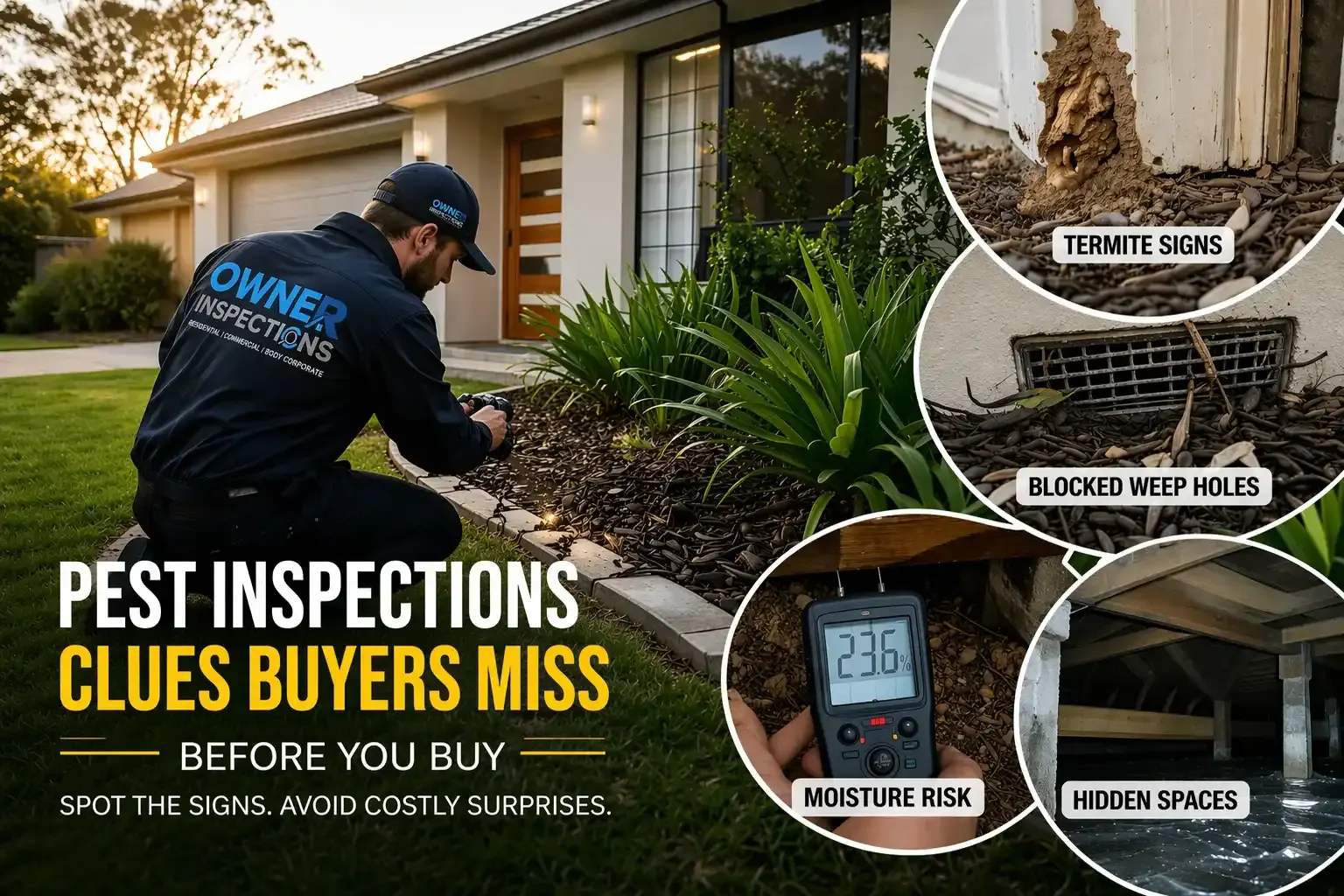
Garden beds or mulch bridging weep holes or the slab edge:When soil, mulch, or garden edging sits above the slab edge or covers weep holes, it can hide termite entry points and reduce the visible inspection zone.
-
Timber-to-ground contact (fences, sleepers, steps, pergola posts):Wood in direct contact with soil is a direct food source and a bridge for pests to reach structural timbers.
-
Poor drainage, ponding, or downpipes dumping near footings:Persistent moisture near the house increases termite risk and can also support timber decay fungi.
-
Blocked subfloor vents or bridged barriers:Subfloor ventilation matters. Blocked vents can increase humidity and moisture, which helps termites and decay.
-
Tree stumps, stored timber, and clutter against walls:Stumps and stored timber can harbour termite activity. Clutter against walls reduces visibility of slab edges and timber features.
Inside the home: subtle signs buyers dismiss
Many signs look like “general wear” or “water damage”, so they get waved away during a quick walkthrough.
-
Doors or windows suddenly tight in one area:Movement can be from moisture changes or structural factors, but it can also appear alongside termite damage when timber loses strength.
-
Bubbling paint or rippled plaster near skirting:This can indicate moisture issues. Moisture is a risk factor for timber decay and can also make conditions more attractive to termites.
-
Skirting boards that feel thin, hollow, or “papery”:Termites can eat timber from the inside out, leaving a thin outer layer.
-
Pinholes, fine powder, or gritty debris (frass):Some borers leave powdery frass. It is not always dramatic, so it is easy to miss.
-
A persistent musty smell in one corner or room:Musty odours can point to dampness and poor ventilation, which links to decay risk and can also support pest activity.
-
Fresh paint, new skirting, or recent patching in a small zone:Cosmetic touch-ups can be innocent. They can also be used to quickly tidy up visible damage before a campaign.
Roof void and subfloor: where the best clues live
Most buyers never enter these spaces, and many open homes restrict access. Yet roof voids and subfloors often reveal the clearest signs: mud leads, moisture sources, timber contact points, and previous treatment indicators.
| Clue buyers miss | What it can indicate | What an inspector does next | Why it matters financially |
|---|---|---|---|
| Mud tubes on brickwork, piers, or in subfloor | Possible active termite travel paths | Trace leads, look for entry points, note risk level, recommend specialist assessment if needed | Treatment and repairs can be significant, and delay can increase damage costs |
| Weep holes or slab edge covered by soil/mulch | Reduced inspection zone and concealed entry potential | Record as conducive condition and access limitation | Reduces early detection odds, can affect negotiation |
| Leaking pipe, damp subfloor, poor drainage | Moisture source supporting pests and decay | Moisture assessment, document source, recommend repairs | Moisture can drive ongoing maintenance and increase pest risk (Health Victoria) |
| Timber posts or stairs in contact with soil | Direct access route to timber | Document contact points, recommend separation/repair | Ongoing risk and future treatment planning |
| Evidence of previous termite treatment (bait stations, drill holes, patching) | Prior activity or management plan | Note evidence, recommend records, confirm current monitoring | Past activity is not always a dealbreaker, but you need proof of management and repairs |
Termites and Timber Pests: What’s Common in Australia
Termites (subterranean termites are the main structural risk)
Subterranean termites pose a significant concern because they can access a home from underground and travel through concealed pathways. Victorian health guidance explains that termites need wood and water to survive, and reducing access to those needs can reduce risk.
Borers and timber decay fungi are commonly reported findings
Not every report is about termites. Borers can affect certain timbers, and timber decay fungi can become an issue when moisture and poor ventilation persist. These findings can still matter for repair budgets, safety, and future maintenance.
QWhat do termite costs look like in real terms?
An ACCC determination discussing termite management cites multiple studies and figures used by industry, including:
- A 2012 industry study estimating an average cost for treatment and repair at about $10,000 per house
- A Queensland public housing study estimating repairs ranging from $18,000 to $60,000 per property
- A 2003 Archicentre estimate that 650,000 Australian homes became infested over five years, with treatment and repair costs estimated at $3.9 billion
Numbers vary, but the pattern is consistent: early detection and reducing conducive conditions can protect budgets and avoid ugly surprises after settlement.
| Pest type | Typical signs | Where found | Risk level | Next step |
|---|---|---|---|---|
| Subterranean termites | Mud tubes, damaged/hollow timber, unexplained movement, shelter tubes in subfloor | Subfloor, slab edge, perimeter, wall cavities | High when active or strong evidence | Get specialist treatment quote and consider invasive inspection |
| Wood borers | Small exit holes, frass (powder), weakened timber | Roof timbers, older hardwood elements, stored timber | Medium to high depending on extent | Identify timber type, confirm active vs old, repair/replace if needed |
| Timber decay fungi (rot) | Soft timber, musty smell, discoloration, damp areas | Wet areas, subfloor, poorly ventilated zones | Medium, can become high if structural | Fix moisture source, improve ventilation, repair affected timber |
| Other timber pests | Localised damage, surface trails | Various | Varies | Follow report recommendations and monitor |
How often should you get inspections (and why annual is common)
For ongoing termite risk management, regular inspections are widely recommended. A CSIRO publication on managing termites states that regular inspections, at least annually, are required because many methods do not provide lasting protection against reinfestation by other colonies.
That annual cadence is a common baseline. Some homes may need more frequent checks depending on local risk factors, property design, history of termite activity, and whether barriers have been compromised.
Not sure what these pest clues mean?
From mud tubes to moisture risks, our inspectors explain what matters, what it costs, and what to do next.
inspection report
How to Choose a Pest Inspector
Ask about standards, scope, and what “non-invasive” means
A timber pest inspection standard sets minimum requirements for visual inspection and reporting. Ask the inspector:
- Do you conduct inspections aligned with AS 4349.3 reporting expectations?
- What areas do you inspect by default: roof void, subfloor, perimeter, outbuildings?
- How do you record access limitations and risk ratings?
Ask what tools are used, and what they can’t prove
Buyers often expect to hear about moisture meters and detection aids. These can help identify moisture and suspect zones, but they do not “see through” every surface or confirm termite absence behind linings.
Good practice is plain talk:
- What the tool detected
- What it suggests
- What needs follow-up to confirm
Look for a report that is easy to act on
Avoid tick-box reports that do not show photos, locations, and clear next steps. A strong report usually includes:
- Plain-English risk summary
- Annotated photos
- Clear “what to do next” actions (monitor, fix conditions, treat, invasive inspection, get quotes)
- A short call or debrief option so buyers can make decisions fast Confirm independence and conflicts of interest
Independence matters for negotiation. If the inspection business is also paid for treatment work, ask how they manage conflicts and whether recommendations are evidence-based, not sales-based.
Check licensing and professionalism where relevant
Pest control licensing is regulated at a state level. For example, Victoria provides information on pest control legislation and licensing. Even when you are booking a pre-purchase inspection rather than a treatment, professionalism, insurance, and clear documentation are signals that the process is taken seriously.
What to Do if the Report Flags Risk
If active termites are suspected or confirmed
- Request a specialist termite treatment quote and ask what method is proposed and why.
- Ask whether an invasive inspection is recommended to confirm extent, especially in high-risk structural zones.
- If you are under auction pressure, use the report to set a hard budget limit or walk-away rule.
If there is evidence of past termite activity Past activity is not always a dealbreaker. The key questions are:
- Was the damage repaired properly?
- Is there a current termite management plan (barriers, monitoring, annual inspections)?
- Are there still conducive conditions that make recurrence more likely?
Ask for treatment records, warranties, and any repair documentation. If records are missing, price in uncertainty and consider a specialist follow-up.
If the report mainly flags conducive conditions
This is common and often fixable:
- Improve drainage and downpipe discharge
- Clear weep holes and maintain a visible inspection zone
- Reduce timber-to-ground contact
- Improve subfloor ventilation and reduce moisture
Use the report as a checklist for early maintenance. Also consider ongoing inspections because conditions can change with seasons and landscaping.
Inspection-day Access Checklist
Make sure the inspector can see what matters:
-
Confirm keys and access: Ensure gates, garages, subfloor entries, and roof hatches are accessible.
-
Clear the manholes and hatches: Remove stored items so the inspector can enter roof void and subfloor access points.
-
Clear the perimeter: Move pot plants, stored timber, and clutter away from external walls and slab edges.
-
Expose weep holes and slab edges where possible: Trim back garden beds and mulch that cover inspection zones.
-
Note any leaks or damp smells: Tell the inspector about known leaks, overflows, or drainage problems.
Ready to book your pest inspection?
Get a fast, independent pest inspection with clear photos and practical next steps so you can negotiate or walk away with confidence.
or request a quote
Frequently Asked Questions
What is a pest inspection in Australia?
A pest inspection is a visual assessment of a property to look for pest activity, pest damage, and risk factors. For home buying, it commonly focuses on timber pests like termites and borers. A pre-purchase timber pest inspection checks accessible areas and documents what could not be accessed. It is non-invasive, so it does not involve opening walls or lifting fixed finishes.
What does a pre-purchase pest inspection include?
It usually includes a visual inspection of interior areas, roof void and subfloor where accessible, and the property perimeter. The report typically notes evidence of timber pests and lists conditions that increase risk, like moisture and blocked inspection zones.
What’s the difference between a pest inspection and a building inspection?
A building inspection focuses on the condition of the structure and materials. A pest inspection focuses on timber pests, timber damage, and pest risk conditions. Many buyers book a combined building and pest inspection for speed and convenience.
Is a pest inspection the same as a timber pest inspection?
In home-buying context, people often use the terms interchangeably. A timber pest inspection is more specific and targets termites, borers, and other timber-destroying organisms.
How long does a pest inspection take?
Time varies with the size and design of the property and access to subfloor and roof void. Larger homes and low-clearance subfloors usually take longer. A good indicator is whether the inspector allows time for photos, notes, and a clear explanation at the end.
How much does a pest inspection cost in Australia?
A common guide is $150 to $300 for a pre-purchase pest inspection. Combined building and pest inspections are often around $500 to $550.
Are termites always visible?
No. Termites can travel in concealed paths and may be active behind linings or under floors without obvious internal signs. This is why access limitations and conducive conditions listed in the report matter.
Can a pest inspection miss termites?
Yes. A non-invasive visual inspection can miss concealed termite activity, especially if access is restricted or entry points are hidden behind landscaping or finishes. This does not mean inspections are pointless. It means buyers should treat the report as risk information, not a guarantee.
What are “conducive conditions” in a pest report?
Conducive conditions are features that make termite attack more likely or harder to detect, such as high moisture, blocked weep holes, timber-to-ground contact, and poor drainage. Termites need wood and water, so reducing access to those helps reduce risk.
Do I need a pest inspection for apartments or strata properties?
Often yes, but the focus changes. For apartments, individual unit issues may be limited, while common property and ground-level structures can matter more. If you are buying a townhouse or ground-floor unit, pay attention to perimeter conditions, garden beds, and subfloor spaces where relevant.
Does home insurance cover termite damage?
Commonly, termite damage is excluded. Many Australian insurers do not cover termite damage under standard policies. Always check the Product Disclosure Statement for the specific policy you are considering.
How often should I get termite or pest inspections?
Regular inspections are commonly recommended at least annually because termite activity can develop between visits. Some properties may need more frequent checks based on risk factors and history.
Should I still buy a house with previous termite damage?
Sometimes. The decision depends on documented repairs, proof of treatment, and whether a management plan exists. If records are missing or the extent is unclear, consider a specialist follow-up and price the uncertainty into your offer.
Can sellers hide termite damage at open homes?
They can hide clues through staging and cosmetic repairs, such as rugs covering damaged flooring or fresh paint over patched areas. This is why roof void, subfloor, and perimeter checks matter more than a quick internal walkthrough.
What should I do before inspection day to improve access?
Clear roof and subfloor access points, ensure gates are unlocked, and move items away from walls and slab edges. Ask the agent in advance to support access so the inspection has fewer limitations.