
For homebuyers, homeowners and investors, that matters because hidden defects become more expensive to fix in a rising-cost market. A cracked drain, roof leak, damp subfloor, failed waterproofing detail or termite-damaged framing is never good news. But when diesel, freight and material inputs are surging, each repair can bite harder than it would in a calmer market. That is why this is not just commodity news. It is a property decision issue.
303.5 cpl
Diesel across Australia’s 5 largest cities
252.2 cpl
Regular unleaded across Australia’s 5 largest cities
307.6 cpl
Diesel across 190+ regional locations
Source: ACCC, 25 March 2026 retail averages.
+US$18
Brent rise from 20 Feb to 11 Mar 2026
+38 A cpl
Mogas 95 rise from 20 Feb to 11 Mar 2026
+61 A cpl
Gasoil 10 ppm rise from 20 Feb to 11 Mar 2026
ACCC weekly fuel price monitoring update, comparing the week to 20 February with the week to 11 March 2026.
Oil Prices in Australia Today
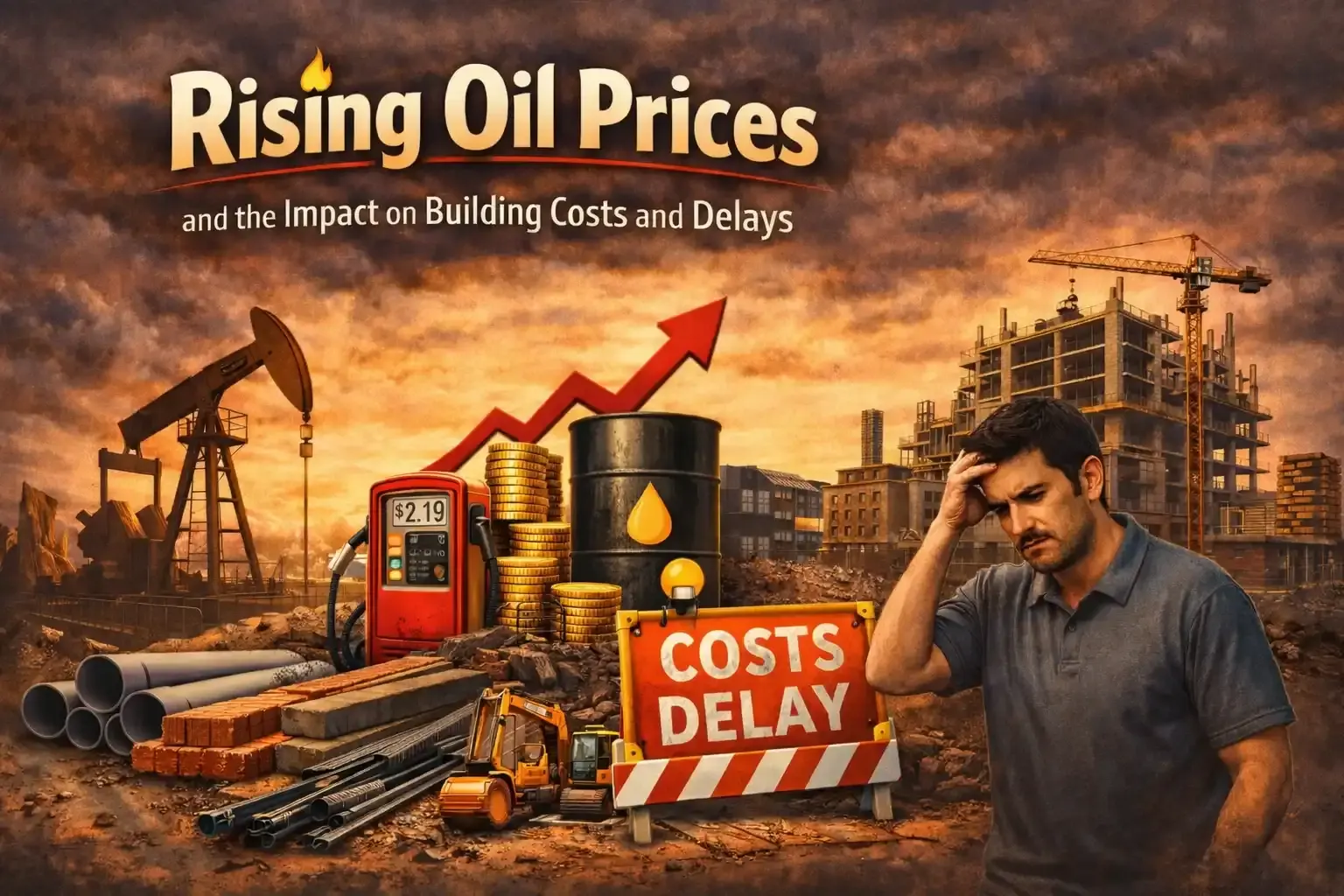
Rising oil prices lift building costs in Australia through three main channels: diesel and freight, energy-heavy manufacturing, and oil-linked products such as PVC and bitumen. The result is higher quotes, more supplier surcharges, tighter fixed-price margins, and a greater risk of delays.
Oil benchmark and Australian fuel snapshot, current as at 30 March 2026.
| Measure | Current reading | Why it matters |
|---|---|---|
| Brent crude | US$116.20/barrel | Main global crude benchmark watched by Australian media and industry |
| WTI crude | US$103.23/barrel | Another global crude benchmark, useful for oil price news context |
| AIP International Market Watch | Published 30 March 2026 | Best Australia-relevant chart source for Brent, Tapis, Mogas 95 and Gasoil |
| ACCC average diesel, 5 largest cities | 303.5 cpl on 25 March | Diesel hits freight, earthmoving, quarries, deliveries and site equipment |
| ACCC average regular unleaded, 5 largest cities | 252.2 cpl on 25 March | Gives broader fuel context, but diesel is more exposed to construction use |
| ACCC move from 20 Feb to 11 Mar | Brent US$73 to US$91 | Shows how fast crude moved in a short period |
| ACCC move from 20 Feb to 11 Mar | Mogas 95 68 to 106 A cpl | Shows refined petrol benchmark pressure |
| ACCC move from 20 Feb to 11 Mar | Gasoil 10 ppm 79 to 140 A cpl | Shows why diesel pressure has been especially sharp |
Why Oil Prices Affect Building Costs in Australia
Fuel and freight
Construction runs on diesel. Trucks carry bricks, timber, plasterboard, cable, tiles and pipes. Quarries and concrete suppliers run heavy equipment. Excavators, generators and site vehicles all burn fuel. Diesel has distinct industrial and remote-use demand, which is one reason it can move differently from petrol. Suppliers applying fuel surcharges to sand, concrete and delivered materials, while builders say anything moved by truck is going up.
This pass-through is not theoretical. One quarry operator told ABC diesel accounted for about 20 per cent of overheads at his off-grid site. In civil construction, industry figures cited that diesel makes up about 7.75 per cent of any tender, with roughly $46 million added to a $1 billion project under current conditions. Those examples are from larger projects, but the same mechanics flow into residential work through supplier pricing, delivery charges and subcontractor margins.
Energy-intensive manufacturing
Not every building cost is directly oil-based, but many are energy-heavy. Construction prices are being pushed up by labour shortages, wage growth and higher input costs. It also notes pressure in concrete and electrical services, and earlier ABS releases linked clay bricks to higher energy, labour and freight costs and cables and conduits to higher copper prices for manufacturing. QBCC now tells Queensland homeowners plainly that timber, steel, concrete and other core materials have risen because of global supply issues, demand spikes and freight challenges.
That matters because even when oil is not the whole story, it can still be the trigger that pushes already-stretched supply chains into a new round of increases. A material might be made locally, but its ingredients, freight, packaging, energy bill or imported components can still carry the oil shock through.
Oil-derived building products
Some products are much more directly exposed. PVC pipes, resins, certain sealants, coatings, insulation inputs and bitumen all have petroleum links somewhere in the chain. The federal housing minister identified PVC piping sourced from Asia as the most immediate vulnerability, while Australian pipe suppliers warned of price rises and disrupted supply capability.
Oil prices are up. Could hidden defects cost you more than you think?
Before you buy, get an independent pre-purchase inspection to uncover defects that may become far more expensive to fix when fuel, freight and building material costs are rising.
Inspection
Which Building Materials Are Most Exposed?
Material exposure to higher oil and fuel costs.
| Material | Why it rises | Likely project impact |
|---|---|---|
| PVC pipes and fittings | Petrochemical feedstocks, imported resin, shipping and freight | Plumbing, drainage and civil works become dearer, with higher shortage risk |
| Bitumen | Oil-linked input, much of Australia’s bitumen is imported | Road base, driveways and civil works can face sharper cost pressure |
| Concrete | Diesel for quarrying and transport, fuel levies, higher energy and labour costs | Slab pours, footings and structural works become more expensive |
| Bricks | Energy-intensive manufacturing plus freight | Masonry packages and delivered rates rise |
| Copper and cabling | Higher copper prices plus manufacturing pressure | Electrical rough-in and fit-off budgets tighten |
| Steel and reinforcement | Freight, energy and wider industrial input pressure | Frames, structural steel and reinforcement can move up |
| Skip bins and site waste | Diesel and haulage costs | Small line item, but repeated charges add up |
For buyers and owners, the point is not to memorise every commodity. It is to recognise where surprises usually show up. Wet areas, drainage, roofing, external waterproofing, structural cracking, retaining walls, paving and site drainage all rely on materials or deliveries that can become more expensive very quickly.
How Rising Oil Prices Cause Construction Delays
The first delay effect is simple: higher prices trigger admin and negotiation. Builders reprice quotes, suppliers shorten validity periods, and some firms add emergency fuel levies with little warning. ABC reported suppliers charging emergency levies on everything from sand to concrete, with builders receiving immediate surcharge notices and trying to rework client expectations on fixed-price jobs.
The second delay effect is supply risk. In the same ABC coverage, pipe suppliers warned of looming shortages, and industry sources described disruption that felt “like COVID” again. When a key product is late, work often cannot proceed in the planned sequence. Plumbing rough-in, groundworks, concrete scheduling and fit-off can all shift. That does not always stop the whole project, but it often slows it down.
The third effect is project viability. ABC reported that civil contractors expect some slowdown in projects starting, and industry groups warned some projects could stall without cost-recovery support. On residential jobs, the same risk shows up in a different way: builder caution, slower quote turnaround, tighter contract terms, or owners postponing discretionary renovation stages.
Rising building costs can turn small issues into big repair bills
A building and pest inspection helps you spot structural issues, moisture damage and pest risks early, so you can budget better before repair costs and delays climb further.
and [Pest Inspection](/timber-pest-inspections)
What This Means for Homebuyers, Homeowners and Investors
If you are buying an existing home, rising oil prices do not change the building itself. They change the cost of putting things right after settlement. That makes due diligence more valuable. Written building inspection report can list faults, whether they can be repaired, how much repairs are likely to cost, and issues that may help negotiate price or contract terms. In a rising-input market, that information matters even more.
If you are planning a renovation, the main risk is not only a higher quote. It is a quote that changes after demolition starts or after a supplier resets pricing. Homeowners should use a detailed contract, understand variations, and keep communication clear because unforeseen issues and changing costs are common drivers of blowouts.
If you are building new, fixed-price contracts may not fully shield the market. Many builders are being forced to absorb oil-related increases under fixed-price arrangements, which can pressure profitability and timelines. This means your price might stay the same on paper for a while, but the risk can reappear through variations, longer lead times, or pressure on completion dates.
World Oil Prices vs the Price of Oil Today in Australia
When people search price of the oil today Australia, they often mean two different things. One is the global barrel price, usually Brent or WTI. The other is what Australians feel locally, which is retail petrol and diesel pricing. Those are connected, but they are not the same number.
Australia-relevant pricing sits closer to Singapore petrol and diesel benchmarks, plus crude markers such as Brent and Tapis. Australian retail fuel prices are largely determined by international refined fuel benchmarks, crude oil prices and the AUD-USD exchange rate. That is why a crude price headline alone never tells the full story for local builders or homeowners.
Diesel also deserves separate attention. Diesel has its own demand pattern because it is used not only in transport but also in industrial and remote energy applications. That helps explain why diesel can rise faster than petrol and why construction feels the squeeze so quickly.
How to Reduce Cost and Delay Risk Before You Buy or Build
Start with an independent pre-purchase inspection. The fee is small compared with buying a property that needs extensive unforeseen repairs, and a written report can help identify faults, repair needs and likely repair costs. That is exactly the kind of information buyers need when building inputs are rising.
Prioritise structural, moisture and drainage defects first. Obvious defects such as faulty roofs, leaking ceilings, cracked walls, damaged foundations, mould, lack of waterproofing and drainage issues. These are the kinds of findings that can become costly quickly when concrete, plumbing and delivered materials are all under pressure.
Budget a contingency and prepare for variations and unforeseen issues. In the current market, that means allowing room not only for the defect itself, but also for freight, material and timing pressure.
Check contract wording. If you are renovating or building, look closely at variation clauses, price validity periods, fuel surcharge wording, delay clauses and lead-time assumptions. Builders and suppliers are actively dealing with surcharge pressure and fixed-price strain.
Use staged repair planning. Not every issue has to be fixed on day one. A clear inspection report lets buyers separate urgent work from work that can wait, helping them protect cash flow when materials are volatile. Owner Inspections’ own buyer and reporting guides support this type of prioritised decision-making.
Want help deciding which report fits your situation?
Speak with Owner Inspections about your defect photos, timeline, and next steps so you can choose the right inspection or reporting service with confidence.