
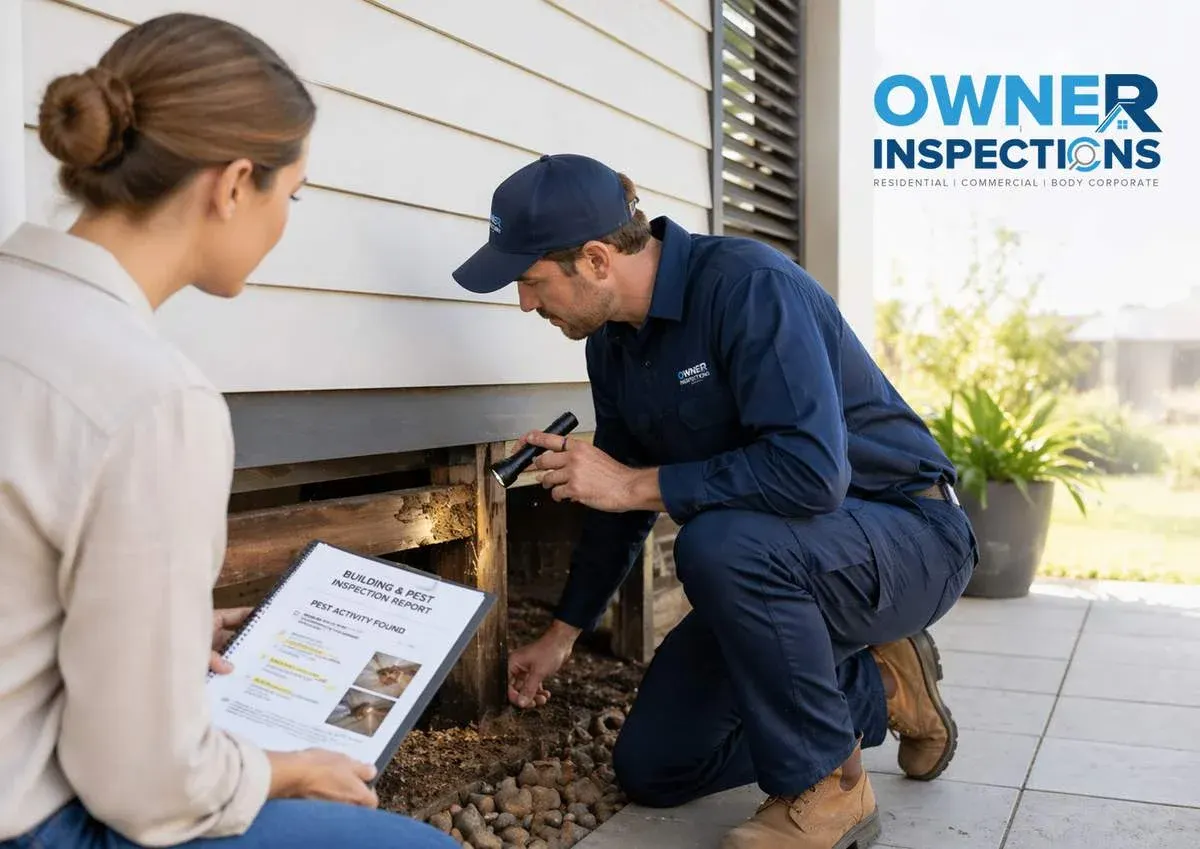
The good news is that pest findings do not always mean you should walk away from the property. The bad news is that guessing your next step can be expensive.
A building and pest inspection report may identify active termites, old timber damage, damp subfloor areas, wood borers, or drainage issues that increase the risk of future infestation. What happens next depends on whether the issue is active, historical, or a risk condition.
Need Clear Findings Before Choosing a Pest Control Company?
Owner Inspections provides independent building and pest inspection reports for Australian buyers, investors, homeowners, and agents who need clear findings before making a property decision.
and [Pest Inspection](/timber-pest-inspections)
What Is a Building and Pest Inspection?
A building and pest inspection is a professional visual assessment of a property’s condition. It helps buyers understand structural defects, safety concerns, moisture problems, timber pest evidence, and other issues before they commit to a purchase.
A building inspection may look at accessible areas such as:
- Walls, ceilings, floors, and roof spaces
- External walls and visible structural elements
- Wet areas, plumbing signs, leaks, and drainage
- Subfloor spaces, where accessible
- Safety hazards and major defects
- Moisture readings in areas of concern
The pest inspection part focuses on timber pests and pest-related risks. This may include termites, wood borers, fungal decay, termite damage, termite workings, and conditions that may attract termites.
In Western Australia, Consumer Protection states that pest inspections should be completed to the national standard for timber pest inspections and reports, AS 4349.3, and should cover timber structures such as roofs, floors, outbuildings, and fencing.
What Happens After a Building and Pest Inspection Finds Pest Issues?
Once your inspection is complete, you will receive a building and pest inspection report outlining the findings. At this point, the report becomes your decision guide.
Do not rely only on the summary page. Read the full report and look for terms such as:
- Active termite activity
- Previous termite damage
- Timber pest damage
- Wood borers
- Fungal decay
- Moisture readings
- Timber-to-soil contact
- Poor drainage
- Roof leaks
- Subfloor dampness
- Inaccessible areas
- Conditions conducive to termites
The next step is to speak with your inspector. Ask them to explain the pest-related findings in plain language. For example, “Does this mean termites are active now?” or “Is this old damage, or does it need urgent assessment?”
The inspector may recommend a licensed pest controller, termite specialist, builder, engineer, plumber, roofer, or drainage contractor, depending on the issue.
Where possible, get written pest control quotes before settlement. A written quote may help you understand treatment costs, repair risks, and whether you need to discuss a price adjustment, repair request, or contract condition with your conveyancer or solicitor.
Do You Always Need Pest Control After an Inspection?
No. Not every pest-related finding means immediate pest control treatment is required.
Some findings are warning signs rather than active infestations. For example, a report may note damp timber in the subfloor, garden beds covering weep holes, leaking pipes, or timber stored against the house. These issues raise the risk of termites but may not mean termites are currently active.
| Report Finding | What It Means | Likely Next Step |
|---|---|---|
| Active infestation | Live termites or active pest evidence may be present. | Arrange urgent assessment and a written treatment quote. |
| Previous damage | Past termite or timber pest damage is visible, but activity may not be current. | Confirm treatment history and assess repair needs. |
| Conducive conditions | Moisture, poor drainage, stored timber, or timber-to-ground contact may increase risk. | Remove risk factors and schedule monitoring. |
Health Victoria explains that termites need wood and water to stay alive. Reducing their access to these can reduce the risk of termite attack.
That is why a good pest control company should not push the same treatment for every property. They should confirm the finding, inspect the affected areas where accessible, and explain whether the issue needs treatment, monitoring, repair, or risk reduction.
Working with experienced providers like Masters Pest Control is a good option. Engaging licensed termite specialists in Sydney tends to ensure your pest issue goes away permanently.
Common Pest Risks Found in Building and Pest Reports
Termites
Termites are one of the most serious findings in a building and pest inspection report because they can damage timber framing, flooring, skirting boards, roof timbers, fences, and other timber structures.
Signs may include mud tubes, termite workings, hollow-sounding timber, damaged skirting boards, soft timber, moisture around affected areas, or visible termite activity.
Active termite activity needs prompt assessment. Previous termite damage also matters because it may affect structural integrity, repair costs, insurance questions, and future resale confidence.
Wood Borers
Wood borers can leave small holes, fine dust-like frass, and weakened timber. They are more common in some older properties or untreated timber.
Not every borer finding is severe, but the report should help identify whether the damage is minor, widespread, or worth further specialist review.
Fungal Decay
Fungal decay, often called wood rot, occurs when timber stays damp. It may be linked to roof leaks, plumbing leaks, poor subfloor ventilation, rising damp, drainage problems, or failed waterproofing.
Fungal decay is not the same as termite damage, but it can weaken timber and create conditions that pests like.
Rodents, Cockroaches, Spiders, and Other Pests
Some reports may mention evidence of rodents, cockroaches, spiders, ants, or other pests. These may need general pest treatment, but in a property purchase, the highest-risk issues are usually timber pests, moisture problems, and damage that may affect structure or safety.
Moisture and Drainage Issues
Moisture findings matter because they can point to hidden property problems. A moisture reading may lead to further checks for plumbing leaks, drainage faults, roof leaks, poor ventilation, or waterproofing failure.
Moisture also increases termite risk, so it should not be ignored.
Why Choosing the Right Pest Control Company Matters
Choosing the right pest control company after a building inspection is not just about getting rid of pests. It can affect your repair budget, settlement decision, negotiation position, safety, and long-term property costs.
The wrong provider may:
- Miss active termites
- Treat only visible areas
- Provide a vague quote with hidden exclusions
- Recommend a cheap treatment that does not suit the property
- Fail to include monitoring or follow-up
- Use pressure tactics before you have time to compare options
Termite management often needs careful investigation, treatment selection, follow-up inspections, and risk reduction. A quick spray may be suitable for some general pests, but it is not a full answer for many termite situations.
When a Defect Dispute Needs Independent Support
If your building defect matter is heading toward a tribunal, court, or formal dispute, an expert witness report can provide independent findings in a clear format.
Witness Reports
How to Choose a Pest Control Company After a Building Inspection
1. Check Their Pest Control Licence
Pest control licensing is managed by state and territory rules, not one single national system. Ask for the company’s licence number and verify it with the relevant regulator in your state or territory.
In Victoria, the Department of Health advises homeowners to make sure a pest control operator is licensed before hiring them. It also provides a searchable register of current licence holders.
Do not stop at “Yes, we are licensed.” Ask:
- What is your licence number?
- Is the licence current?
- Does it cover the work needed at this property?
- Does it include timber pests if termites are involved?
Victorian licensing information also separates authorisations for general pest control excluding timber pests and general pest control including timber pests. This is a good reminder to check the scope, not just the existence of a licence.
2. Confirm They Handle Timber Pests, Not Just General Pests
Termite treatment is not the same as a general spider, cockroach, or ant treatment.
If your pest inspection report mentions termites, termite damage, timber pest activity, or conditions conducive to termites, ask whether the provider regularly handles timber pests.
Good questions include:
- Do you specialise in termite management?
- Have you treated properties with this type of construction?
- Can you assess subfloor, roof void, slab edge, garden, fence, and detached structures where relevant?
- Can you explain the likely source of activity?
3. Ask for Insurance Details
A professional pest control company should be able to provide proof of insurance.
Ask for:
- Public liability insurance
- Professional indemnity insurance where relevant
- Workers compensation where applicable
Do not rely on verbal assurance. Ask for written proof. If the work involves drilling, chemical application, access to subfloor areas, or treatment near occupied spaces, insurance and safety procedures matter.
4. Give Them the Inspection Report Before Quoting
A pest control quote should respond to the actual findings in your building and pest inspection report.
Send the pest controller:
- The full report
- Photos from the report
- Notes on affected rooms or areas
- Moisture readings
- Details of inaccessible areas
- Any treatment history provided by the seller
A quote given without reading the report or inspecting the property may be too generic. It may also miss key areas, such as a detached garage, fence line, subfloor, roof void, wet area, or retaining wall.
5. Compare Treatment Options, Not Just Price
Different pest problems need different treatment plans. Health Victoria lists termite control methods such as baiting, dusting, and chemical barriers. It also notes that physical barriers can be built into new homes to help prevent termites reaching timber structures.
| Treatment Type | Best For | Ask About |
|---|---|---|
| Chemical barrier | Subterranean termite management | Product, drilling, warranty, retreatment, access limits |
| Baiting system | Monitoring and colony management | Visit frequency, bait replacement, contract length |
| Dusting | Localised termite activity | Suitability, follow-up timing, disturbance risk |
| Moisture or risk correction | Reducing future termite risk | Drainage, leaks, ventilation, timber removal |
The cheapest quote may not include monitoring, warranty, drilling, follow-up visits, detached structures, or treatment of high-risk external areas. Compare the scope before comparing price.
6. Ask for a Written Treatment Plan
A written pest treatment plan should include:
- Pest identified
- Areas affected
- Treatment method
- Products or chemicals used
- Safety instructions
- Preparation required
- Follow-up visits
- Warranty or service period
- Exclusions
- Total cost
7. Check Reviews, But Read Them Carefully
Reviews can help, but star ratings alone are not enough.
Look for reviews that mention:
- Termite treatment
- Timber pest inspections
- Follow-up service
- Clear communication
- Written quotes
- Aftercare
- Warranty handling
A company with strong general pest reviews may not be the best choice for termite work. Read the details.
8. Ask About Follow-Up Inspections
Termite management is often ongoing. Ask how often the property should be checked after treatment.
The answer should depend on the property, construction type, moisture conditions, treatment method, and level of risk. In higher-risk situations, more frequent checks may be recommended.
A provider who treats the property and disappears without follow-up may not be the right fit.
9. Make Sure They Communicate Clearly
A good pest control company explains:
- What is urgent
- What is preventive
- What is optional
- What is excluded
- What the treatment can and cannot do
- What needs repair by another trade
They should not pressure you into immediate expensive treatment without showing evidence.
Questions to Ask Before Hiring a Pest Control Company
| Question | Why It Matters |
|---|---|
| Are you licensed in this state or territory? | Confirms legal authority to perform pest control work. |
| Does your licence cover timber pests or termite treatment? | General pest control may not be enough for termites. |
| Can you review my building and pest inspection report first? | Ensures the quote responds to actual findings. |
| What treatment options are available? | Helps compare chemical, baiting, monitoring, or combined approaches. |
| Will I receive a written treatment plan? | Protects the buyer from vague or verbal promises. |
| What chemicals or products will be used? | Helps assess safety, preparation, and environmental concerns. |
| Is follow-up included? | Termite management often requires monitoring. |
| Is there a warranty or service agreement? | Clarifies what happens if activity continues. |
| Do you provide before-and-after documentation? | Useful for records, negotiation, and future resale. |
| Are there exclusions? | Prevents surprise costs. |
Red Flags to Watch Out For
Some warning signs should make you pause before hiring a pest control company.
Be careful if the provider:
- Refuses to provide licence details
- Cannot explain whether they are authorised for timber pests
- Gives a quote without inspecting the property or reviewing the report
- Offers a “one spray fixes everything” solution for termites
- Uses scare tactics or pressures immediate payment
- Provides no written quote
- Provides no product or safety information
- Has poor communication before the job
- Makes guarantees that sound unrealistic
- Is much cheaper than every other quote without explaining why
A low price is not automatically a red flag, but a vague low price is. If one provider is significantly cheaper, ask what is excluded. It may be follow-up visits, monitoring, warranty, drilling, access work, or treatment of detached structures.
How Much Does Pest Control Cost After a Building Inspection?
Pest control costs after a building inspection vary depending on the pest, property size, access conditions, severity of activity, treatment method, and whether follow-up monitoring is included.
Use the table below as an indicative guide only.
| Service Type | Indicative Cost Range | Notes |
|---|---|---|
| General pest treatment | $150–$350+ | Often for cockroaches, spiders, ants, or general pests. |
| Timber pest or termite inspection follow-up | $250–$500+ | May vary by property size and urgency. |
| Localised termite treatment | $500–$1,500+ | Depends on location, access, and treatment type. |
| Full termite management system | $2,000–$5,000+ | May include chemical barriers, baiting, monitoring, or combined systems. |
| Major termite damage repairs | Highly variable | Requires builder, engineer, or specialist assessment. |
These figures are not fixed quotes. Always get at least 2–3 written quotes and compare treatment scope, warranty, follow-up, exclusions, and safety details.
Can You Use the Pest Control Quote to Negotiate?
Yes, a written pest control quote may help support a negotiation, but your options depend on the contract, timing, state rules, and advice from your conveyancer or solicitor.
Buyers may discuss:
- A price reduction
- Seller-funded treatment before settlement
- Access for further inspection
- A contract extension
- A specialist timber pest report
- Repair quotes from builders or engineers
In Victoria, Consumer Affairs Victoria states that private sale buyers can negotiate contract conditions such as successful completion of a building or pest inspection.
Auction buyers need to be more careful. SA Government says buyers need to arrange a building and pest inspection before auction day because, if they are the successful bidder, the contract cannot be made subject to a satisfactory building inspection report.
Do not make legal or financial decisions based only on a pest quote. Speak with your conveyancer or solicitor before asking for formal contract changes.
Should You Walk Away If Termites Are Found?
Not always. Termites are serious, but the right decision depends on the facts.
You may still proceed if:
- The damage is minor
- There is no current activity
- Treatment history is clear
- Repairs are manageable
- The seller agrees to a fair adjustment
- Your conveyancer confirms your options
You may need to reconsider if:
- Active termites are present
- Structural timber damage is extensive
- Repair costs are unclear
- Access is limited
- The seller refuses further inspection
- The contract does not protect you
- The risk is beyond your comfort level
Tip
The key is not panic. The key is evidence. Get the inspection report explained, request a written treatment quote, check likely repair costs, and get contract advice before making a final call.
What Role Does Your Building Inspector Play After the Report?
Your building inspector does not necessarily perform pest treatment. Their role is to identify visible defects, pest-related signs, moisture concerns, safety issues, and recommended next steps.
A good inspector can help you understand whether a finding is:
- Structural
- Pest-related
- Moisture-related
- Maintenance-related
- A safety issue
- A matter for a specialist
Owner Inspections aligns with buyers and owners who want independent, comprehensive reporting, clear explanations, and practical next steps. Its ideal customers include homebuyers, homeowners, real estate investors, agents, builders, and property managers who value accurate reports and independent advice.
Owner Inspections reports may help identify structural defects, termite and pest activity, previous pest damage, moisture issues, conditions conducive to pests, and areas that need specialist follow-up.
Choosing a Pest Control Company After an Inspection
Use this checklist before hiring a pest control company:
- Read the full building and pest inspection report.
- Ask your inspector to explain pest-related findings.
- Confirm whether the issue is active, historical, or a risk condition.
- Choose a licensed pest control company.
- Verify licence status with your state or territory regulator.
- Confirm they handle termites or timber pests if relevant.
- Provide the inspection report before requesting a quote.
- Get a written treatment plan.
- Compare at least 2–3 quotes.
- Ask about follow-up inspections and warranty.
- Avoid vague, verbal, or high-pressure offers.
- Speak with your conveyancer before making settlement decisions.
Getting the Most Value from Your Home and Building Investment
A building and pest inspection report gives you a clearer view of the property before you make a major decision. If pest issues appear in the report, the best next step is not panic or guesswork. It is a careful process.
Read the report, speak with your inspector, confirm whether the issue is active or historical, and choose a licensed pest control company that can provide a written treatment plan. Compare licence details, timber pest experience, insurance, treatment options, follow-up, warranty, and exclusions before choosing a provider.
Ready to Document Your Building Defects Properly?
Get help from Owner Inspections before evidence is lost, repairs begin, or the defect worsens. Speak with the team about the right inspection report for your situation.