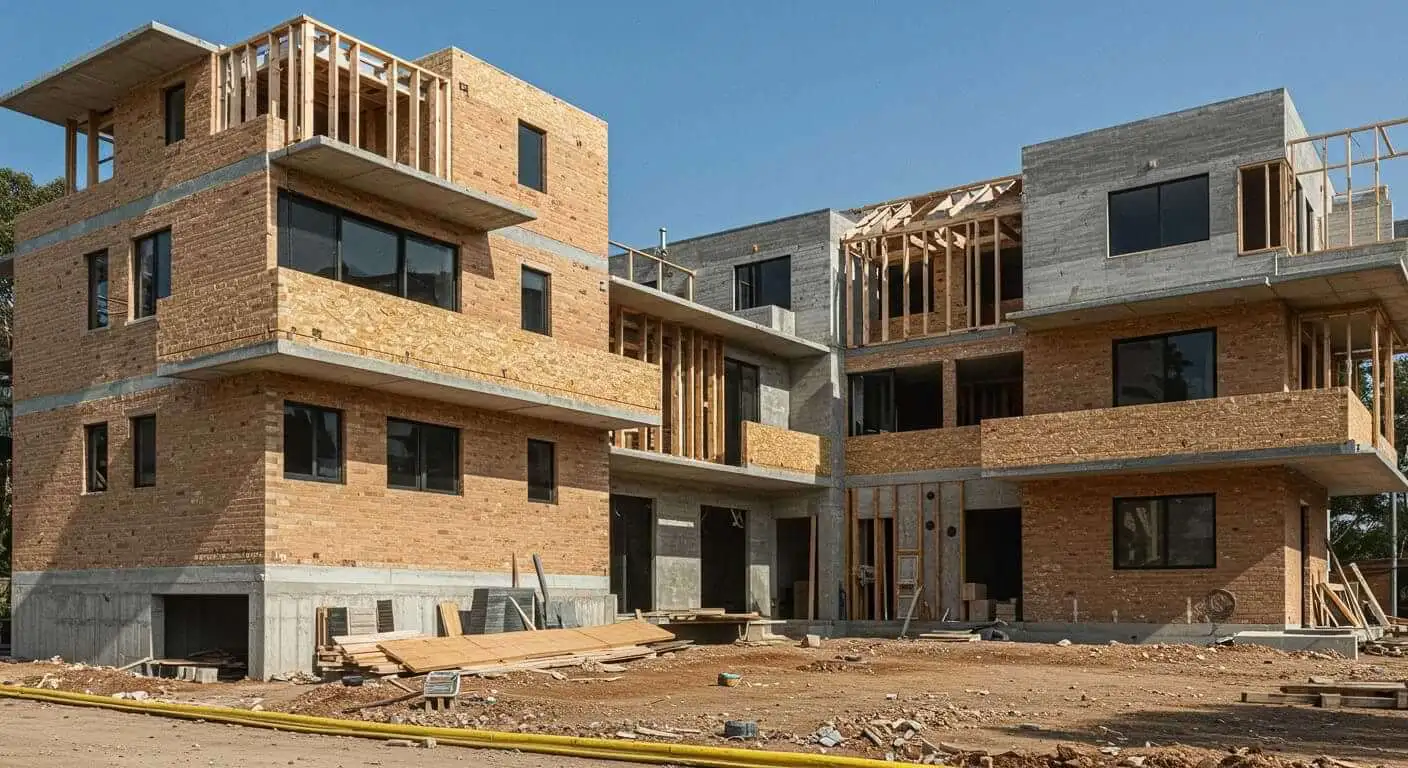
1. Pre-Slab/Footing Inspection
The foundation is the backbone of any building. Before pouring the slab, a pre-slab or footing inspection is essential to confirm that the site is properly prepared. Inspectors check the formwork, steel reinforcements, and plumbing work to ensure everything is set up according to the plan. Getting it right at this stage prevents major structural issues later.
What’s Checked:
- Site preparation and leveling
- Placement of reinforcement bars and mesh
- Plumbing and drainage locations
- Formwork setup

2. Frame Stage Inspection
Once the frame goes up, the building starts taking shape. However, this stage is more than just walls and beams. Inspectors focus on the structural integrity, making sure the frame is sturdy and follows the building plans. The inspector looks at everything from the roof trusses to the wall bracing and ensures that the frame meets local standards.
What’s Checked:
- Correct installation of studs, beams, and trusses
- Bracing and tie-downs for wind resistance
- Positioning of windows and doors
- Compliance with engineering specifications
3. Lock-Up/Pre-Plaster Inspection
At this stage, the building is “locked up,” meaning windows, doors, and roofing are in place, but interior finishes haven’t been started yet. The inspection focuses on elements hidden once plastering begins, like insulation, electrical wiring, and plumbing rough-ins.
What’s Checked:
- Insulation installation
- Electrical and plumbing rough-ins
- Window and door seals
- Wall wraps or sarking (where applicable)

4. Pre-Paint/Waterproofing Inspection
Before the finishing touches like painting and tiling, a pre-paint or waterproofing inspection ensures that the building is well-sealed. Waterproofing is critical, especially in wet areas like bathrooms, laundries, and kitchens. The inspector checks that membranes are installed correctly and that the structure is ready for the final layers.
What’s Checked:
- Waterproofing in wet areas
- Final adjustments for plumbing and electrical fittings
- Wall surface preparation for paint
- Roof and gutter seals
5. Final/Handover Inspection
The final inspection is your chance to catch any last-minute issues before taking ownership. Inspectors perform a comprehensive check of all elements, from cosmetic finishes to functionality. This inspection ensures that the home is ready for occupancy and meets all required standards.
What’s Checked:
- Functionality of doors, windows, and locks
- Tiling, painting, and other finishes
- Appliances and fixtures installation
- Any defects or incomplete work

6. Maintenance/Warranty Inspection
Even after you’ve moved in, building inspections don’t end. Many builders offer a warranty period where they’ll fix defects that arise within a certain timeframe. A maintenance inspection towards the end of this period ensures that everything has settled properly and that no hidden issues have cropped up.
What’s Checked:
- Cracks or movement in walls
- Roof leaks or guttering issues
- Defects in flooring or tiling
- Settlement in the foundation
Why Each Stage Matters
Skipping or rushing through any of these inspections can lead to long-term problems that are expensive to fix. By catching issues early, you protect your investment and ensure your home is built to the right standard.

Partnering with Professional Inspectors
Frequently Asked Questions
-
Each inspection typically takes between 1 to 2 hours, depending on the complexity and size of the property. Larger or more intricate builds may require additional time.