
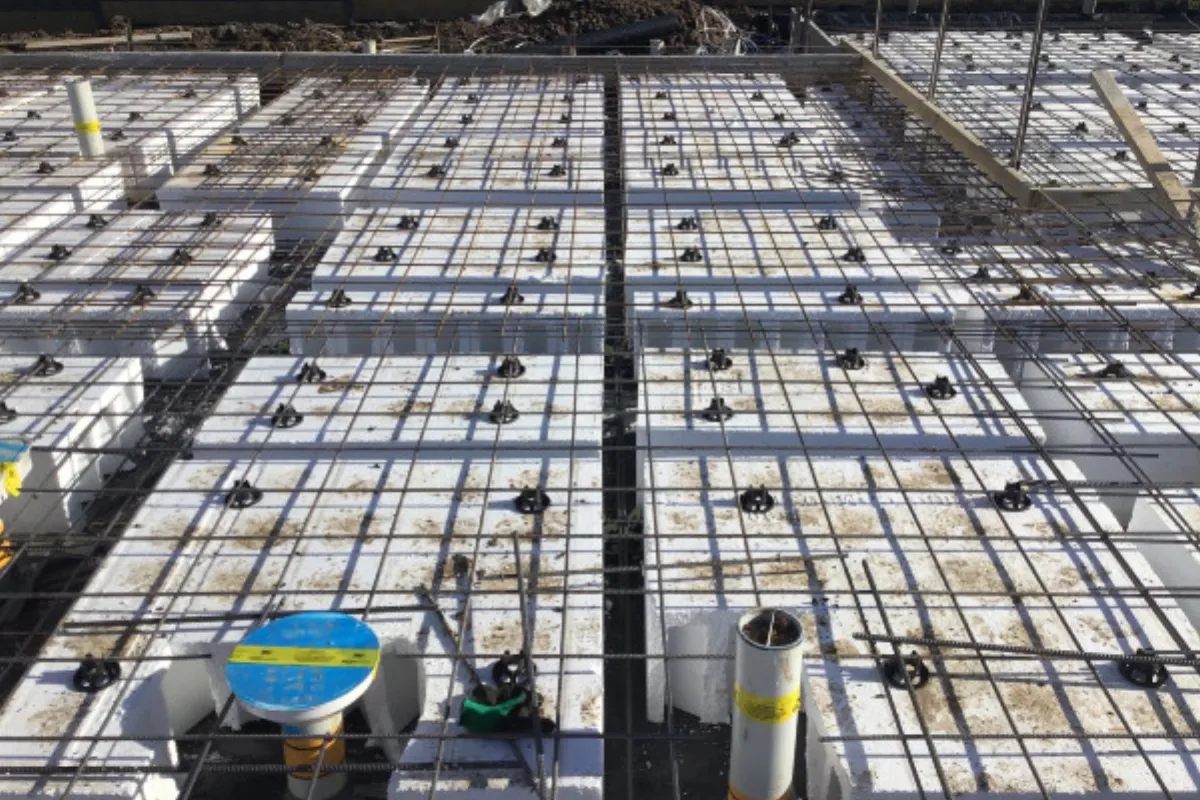
A slab pre-pour inspection is an independent assessment carried out after formwork, reinforcement, and moisture barriers are in place but before concrete is poured for a slab foundation. In Australia, this inspection verifies that the slab design complies with AS 2870 (Residential Slabs and Footings), checks steel reinforcement positioning, confirms formwork dimensions, and assesses soil compaction and site drainage. Pre-pour inspections typically start at $490 AUD and take up to two hours on site. They are one of the most important checkpoints in any residential construction project because once concrete is poured, defects become extremely expensive to rectify.
A slab foundation is a flat, thick layer of concrete poured directly onto prepared ground. It serves as both the structural footing and the floor of the building. Slab foundations are widely used across Australia because they provide stable support on a range of soil types, reduce the risk of differential settlement, and help minimise moisture penetration into the building. Getting the slab right is fundamental to the entire structure above it.
This guide covers everything you need to know about slab pre-pour inspections in Australia, including the types of slab foundations, the step-by-step inspection process, common challenges, costs, and how to prepare your site for a successful outcome.
Why Slab Pre-Pour Inspections Matter
Once concrete has been poured and cured, correcting defects in the slab is disruptive, costly, and sometimes impossible without demolition. A reinforcement bar placed in the wrong position, a moisture barrier with tears, or formwork that has shifted even slightly can compromise the structural integrity of the entire building. These are not problems that surface immediately. They reveal themselves months or years later as cracking, moisture ingress, or uneven floors.
A pre-pour inspection catches these issues while the fix is still straightforward. Repositioning a reinforcement bar before the pour costs almost nothing. Replacing a section of torn vapour barrier takes minutes. Adjusting formwork that has shifted requires basic labour. Compare this to the cost of cutting into a cured slab to address reinforcement deficiencies or dealing with rising damp caused by a compromised moisture barrier. The difference can be tens of thousands of dollars.
Pre-pour inspections also provide documented evidence that the slab was constructed in accordance with the engineering drawings and AS 2870. This documentation is valuable for building surveyors, insurers, and future property owners.
Types of Slab Foundations in Australia
The type of slab foundation used on a project depends on the soil classification, climate, structural loads, and engineering design. Understanding the different types helps explain what the inspector is looking for during a pre-pour inspection.
Monolithic Slab
A monolithic slab is poured in a single operation, with the footing beams and the slab floor formed and poured simultaneously. This type of slab is common on stable soil classifications (Class A and Class S) where minimal ground movement is expected. Monolithic slabs are cost-effective and efficient to construct, but they require precise formwork and reinforcement placement because everything must be correct before the single pour begins.
Frost-Protected Slab
Frost-protected slabs incorporate insulation around the perimeter and beneath the slab to prevent frost heave in cold climates. While less common in most of Australia, they are used in alpine regions of Victoria, New South Wales, and Tasmania where ground temperatures drop below freezing. The pre-pour inspection for a frost-protected slab includes verification of insulation placement, type, and continuity in addition to standard reinforcement and formwork checks.
Post-Tension Slab
Post-tension slabs use high-strength steel cables (tendons) that are tensioned after the concrete has cured to compress the slab and resist cracking. This type of slab is designed for reactive soil classifications (Class H, Class E, and Class P) where significant ground movement is expected. Post-tension slabs require specialised inspection because the tendon layout, anchorage points, and duct positioning must all be verified before the pour. Incorrect tendon placement can result in catastrophic slab failure.
| Slab Type | Best Suited For | Soil Classification | Key Inspection Focus |
|---|---|---|---|
| Monolithic | Stable ground, standard residential | Class A, Class S | Formwork alignment, reinforcement spacing, moisture barrier |
| Frost-Protected | Cold climates, alpine regions | Various | Insulation placement, perimeter detailing, reinforcement |
| Post-Tension | Reactive and expansive soils | Class H, Class E, Class P | Tendon layout, anchorage points, duct positioning |
The 6-Step Slab Pre-Pour Inspection Process
A thorough slab pre-pour inspection follows a systematic process that covers every element affecting the structural performance and longevity of the slab. Here is what the inspection involves, step by step.
Initial Site Assessment
The inspector begins with a general assessment of the site conditions. This includes checking that the site has been properly cleared, that excavation depths match the engineering drawings, and that the building footprint is correctly set out. The inspector also looks for any signs of recent water pooling, fill material that has not been compacted, or site conditions that differ from the soil classification report.
Material Quality Verification
The inspector verifies that the materials on site match the specifications in the engineering drawings. This includes checking the grade and size of reinforcement steel, the type of mesh specified, the concrete mix design (if delivery dockets are available), the vapour barrier thickness and material, and any other components such as post-tension ducts, bar chairs, or edge formwork materials.
Formwork Checks
Formwork defines the shape and dimensions of the slab. The inspector measures formwork to confirm it matches the engineering drawings, checking overall dimensions, footing beam widths and depths, step-downs, rebates, and edge details. Formwork must be secure, properly braced, and free from distortion. Any movement during the pour will result in a slab that does not match the design.
Reinforcement Positioning
This is one of the most important elements of the inspection. The inspector verifies that all reinforcement steel is placed in accordance with the engineering drawings, including bar sizes, spacing, lap lengths, cover to formwork, chair heights, and top and bottom reinforcement layers. Reinforcement that is too close to the surface will corrode over time. Reinforcement that is too deep will not provide adequate structural capacity. Trench mesh in footing beams, slab mesh, and any additional bars around penetrations and step-downs are all checked.
Site Condition Analysis
The inspector assesses site conditions that affect slab performance, including drainage around the building footprint, grading of the surrounding ground, and the condition of any fill material. Poor drainage can lead to water accumulating beneath the slab, causing soil movement and slab distress. The inspector also checks that any plumbing rough-in beneath the slab is correctly positioned and properly supported, and that service penetrations through the slab are adequately sleeved.
Safety Protocol Review
The final step covers site safety relevant to the pour. The inspector notes any safety concerns such as unsecured formwork edges, trip hazards, inadequate access for the concrete truck and pump, or missing barriers around excavations. While not the primary focus of the inspection, safety observations are included in the report as a professional courtesy to the builder.
Key Elements Checked During the Inspection
The following table summarises the key elements that an inspector assesses during a slab pre-pour inspection and why each one matters.
| Element | What Is Checked | Why It Matters |
|---|---|---|
| Soil compaction | Compaction test results, visual assessment of fill | Poorly compacted soil leads to differential settlement and slab cracking |
| Concrete mix | Grade, slump, admixtures per engineering specification | Incorrect mix design reduces slab strength and durability |
| Steel reinforcement | Bar size, spacing, cover, lap lengths, chair heights | Incorrect placement compromises structural capacity and corrosion resistance |
| Formwork | Dimensions, levels, bracing, beam widths and depths | Inaccurate formwork produces a slab that does not match the engineering design |
| Moisture barrier | Type, thickness, overlap, taping, penetration sealing | Compromised barrier allows moisture to rise through the slab, causing damage to floor coverings |
Common Challenges Found During Pre-Pour Inspections
Pre-pour inspections frequently identify issues that would have gone undetected if the concrete had been poured without an independent check. The most common challenges fall into three categories.
Soil Instability
Soil-related issues are among the most common findings. These include fill material that has not been adequately compacted, excavations that have been left open during rain (causing saturation and softening), and soil conditions that do not match the geotechnical report. On reactive clay sites (common across Melbourne, Adelaide, and western Sydney), even minor changes in moisture content can cause significant ground movement. If the inspector identifies soil instability, the pour should be delayed until the issue is addressed.
Improper Formwork
Formwork problems include incorrect dimensions, insufficient bracing, edges that have been knocked out of alignment during reinforcement placement, and step-downs or rebates that do not match the engineering drawings. Formwork that moves during the pour results in a slab with incorrect dimensions, which can affect the entire building above.
Incorrect Reinforcement
Reinforcement issues are the most frequently reported defects in pre-pour inspections. Common findings include bars placed at the wrong spacing, insufficient lap lengths at bar junctions, mesh sheets that have not been properly tied, bar chairs that have sunk into soft ground (reducing concrete cover), and missing additional reinforcement around penetrations or at re-entrant corners. These defects directly affect the structural capacity of the slab.
Reinforcement defects are the single most common finding in slab pre-pour inspections. Even experienced concreters can make errors when placing complex reinforcement layouts. An independent inspection provides a fresh set of eyes before the pour locks everything in place permanently.
Cost and Duration
Slab pre-pour inspections in Australia start at $490 AUD. The final cost depends on the size and complexity of the slab, the type of foundation (monolithic, post-tension, or waffle pod), and the location of the site. Post-tension slab inspections typically cost more due to the additional complexity of tendon layout verification.
| Factor | Detail |
|---|---|
| Starting cost | $490 AUD |
| Typical duration | Up to 2 hours on site |
| Report delivery | Within 24 to 48 hours |
| Applicable standard | AS 2870 (Residential Slabs and Footings) |
| Inspector qualifications | Licensed building inspector with structural knowledge |
The inspection itself typically takes up to two hours on site for a standard residential slab. Larger or more complex slabs, particularly post-tension designs, may require additional time. The inspection report is usually delivered within 24 to 48 hours and includes photographs, measurements, defect descriptions, and references to the applicable standards.
How to Prepare Your Site for a Pre-Pour Inspection
Proper preparation helps the inspection run smoothly and avoids the need for a return visit. Before the inspector arrives, make sure the following items are in order:
- All formwork is complete, braced, and secured
- All reinforcement steel is placed, tied, and supported on bar chairs
- The moisture barrier is installed with correct overlaps and sealed at penetrations
- Plumbing rough-in beneath the slab is complete and supported
- Service penetrations are sleeved
- Engineering drawings are available on site for the inspector to reference
- The site is accessible and safe for the inspector to walk through the formwork area
- Any required compaction test certificates are available
Having the engineering drawings on site is particularly important. The inspector needs to verify reinforcement layouts, footing beam dimensions, and slab thicknesses against the approved design. Without these drawings, the inspection cannot be completed.
Frequently Asked Questions
Frequently Asked Questions
QWhen is the best time of year for a slab pre-pour inspection?
Drier months are generally preferable for slab pours and the inspections that precede them.
In most parts of Australia, the drier months between late spring and early autumn provide the most favourable conditions for slab construction. Wet weather can saturate the subgrade, delay compaction testing, and make it difficult to maintain the integrity of the moisture barrier. That said, slab pours are carried out year-round across Australia. The key is ensuring that the site has not been adversely affected by recent rainfall before the pour proceeds. If conditions are wet, the inspector may recommend delaying the pour until the site dries out and soil conditions stabilise.
QHow long does a slab pre-pour inspection take?
A standard residential slab pre-pour inspection typically takes up to two hours on site.
The duration depends on the size of the slab, the complexity of the reinforcement design, and whether any issues are identified during the inspection. A simple single-storey slab on a flat site may take around one hour. A larger slab with step-downs, multiple footing beams, and complex reinforcement layouts may take closer to two hours or slightly longer. Post-tension slabs generally require additional inspection time due to the tendon verification process. The report is delivered within 24 to 48 hours of the site visit.
QShould I attend the slab pre-pour inspection?
Yes, attending the inspection is encouraged.
Being present during the inspection allows you to see firsthand what the inspector is checking and to ask questions about any issues identified. It also gives you the opportunity to understand the construction process and to verify that the work matches what was agreed in your building contract. If you cannot attend in person, the detailed inspection report with photographs will provide a comprehensive record of the findings. Many inspectors are also happy to discuss the results over the phone after the report has been delivered.
QWhat qualifications should a slab pre-pour inspector have?
The inspector should hold a building inspection licence issued by the relevant state authority, such as the VBA (Victoria), NSW Fair Trading (New South Wales), or QBCC (Queensland).
Relevant qualifications include a Certificate IV or Diploma in Building and Construction, a degree in building surveying or construction management, or equivalent industry experience combined with formal licensing. Experience with slab construction is particularly important, as the inspector needs to understand reinforcement detailing, soil classification systems, and the requirements of AS 2870. Professional indemnity insurance and public liability insurance are also expected.
QHow should I prepare my property for the inspection?
Ensure all preparation work is complete before the inspector arrives. This includes having formwork, reinforcement, and the moisture barrier fully installed and ready for the pour.
The inspector needs clear access to walk through and around the formwork area. Engineering drawings should be available on site for reference. Any compaction test certificates should also be on hand. Remove any debris or materials that obstruct access to the slab area. If the site is muddy or wet, provide information about recent weather conditions so the inspector can assess whether the subgrade has been affected. The more prepared the site is, the more efficient the inspection will be.
QHow are the inspection results presented?
The inspection results are delivered in a written report that includes photographs, measurements, defect descriptions, and references to the applicable Australian Standards.
The report categorises findings by severity. Items that require rectification before the pour are clearly identified, along with the reason and the relevant standard reference. Minor observations that do not affect the structural integrity of the slab are also noted. The report is typically delivered as a PDF via email within 24 to 48 hours of the site visit. Some providers also offer online portals where reports can be accessed and shared with relevant parties.
QWhat equipment does the inspector use?
Inspectors use a range of tools to conduct a thorough pre-pour inspection, including measuring tapes, laser levels, cover meters, and digital cameras.
A measuring tape is used to verify bar spacing, lap lengths, and formwork dimensions. A laser level confirms that formwork is set to the correct levels and that any fall or step-down matches the engineering drawings. A cover meter (electromagnetic device) can verify the depth of reinforcement cover where required. Digital cameras are used to document every aspect of the inspection with detailed photographs that are included in the report. Some inspectors also use tablet-based reporting software that allows real-time annotation of photographs and immediate report generation.
QWhat happens if the weather is bad on inspection day?
Light rain generally does not prevent an inspection from proceeding, but heavy rainfall may require rescheduling.
If the site is waterlogged, the inspector may not be able to safely access all areas of the formwork, and standing water can obscure the moisture barrier and lower reinforcement layers. Heavy rain before the pour can also saturate the subgrade, which may require additional compaction testing before the concrete is placed. If the inspection is rescheduled due to weather, most providers will accommodate the new booking within 24 to 48 hours to minimise delays to the construction program.
QCan the inspection detect underground utilities?
A pre-pour inspection is not a utility detection service, but the inspector will note any visible service runs and check that they are correctly positioned and protected.
The inspector checks that plumbing pipes, electrical conduits, and any other services passing through or beneath the slab are correctly located per the plans, properly sleeved where they penetrate the slab, and adequately supported to prevent movement during the pour. If there are concerns about unknown underground services, a separate utility locating survey using ground-penetrating radar or electromagnetic locators should be arranged before excavation begins.
QDoes the inspection process vary for different slab types?
Yes. The inspection process is adapted based on the type of slab foundation being constructed.
A monolithic slab inspection focuses on formwork, reinforcement, and moisture barrier integrity. A post-tension slab inspection includes additional checks on tendon layout, anchorage details, and duct positioning. A waffle pod slab requires verification of pod placement, edge beam reinforcement, and internal beam reinforcement in addition to standard checks. The inspector adjusts the inspection scope based on the engineering drawings and the specific slab design. Regardless of type, all inspections verify compliance with AS 2870 and the approved engineering specifications.
QHow often should slab inspections be carried out during a build?
A slab pre-pour inspection should be carried out once, immediately before the concrete pour. For projects with multiple slab pours, each pour requires its own inspection.
Some residential projects involve a single slab pour, while others may have separate pours for the garage, the main dwelling, and outdoor areas. Each pour is a separate event with its own formwork, reinforcement, and preparation, so each requires an independent inspection. In addition to the pre-pour inspection, some builders also arrange a post-pour inspection to verify that the finished slab surface is level, free from defects, and matches the engineering drawings. This two-inspection approach provides comprehensive quality assurance for the slab stage.
Key Takeaways
Key Takeaways
- A slab pre-pour inspection verifies reinforcement, formwork, moisture barriers, and soil compaction before concrete is poured, when defects are still easy and inexpensive to fix
- Slab foundations in Australia must comply with AS 2870 (Residential Slabs and Footings), and the pre-pour inspection confirms compliance with this standard
- The three main slab types (monolithic, frost-protected, and post-tension) each require specific inspection focus areas based on their design
- Incorrect reinforcement placement is the most commonly reported defect in pre-pour inspections, directly affecting the structural capacity of the slab
- Pre-pour inspections in Australia start at $490 AUD and typically take up to two hours on site
- Proper site preparation, including having engineering drawings available, ensures the inspection runs efficiently
- The inspection report includes photographs, measurements, and references to applicable standards, providing documented evidence of slab construction quality
References and Resources
Related Articles

Building Inspection Stages: A Comprehensive Guide
With new home starts projected to exceed 190,000 annually by 2025, quality assurance at each construction phase is increasingly important. Learn the six key stages.

Understanding Frame Stage Inspections
Frame stage inspections verify the structural integrity and compliance of a building framework before internal linings are installed. This guide covers what inspectors check, common defects, costs, and why these inspections are required in Australian construction.
Construction Stage Defect Assessment
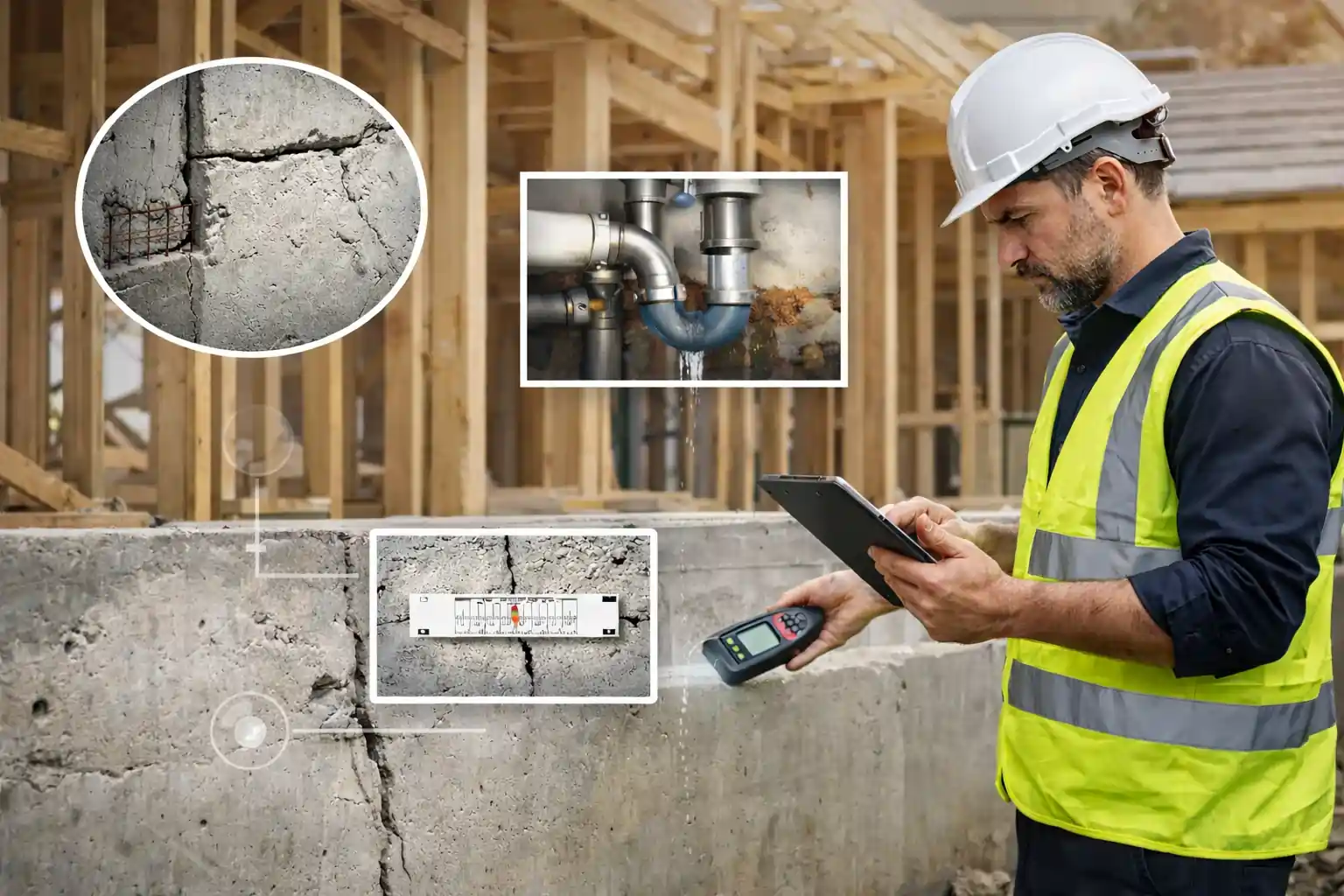
Construction stage defect assessments are vital for protecting structural integrity. Defects caught early prevent escalation into costly issues that can increase project costs by up to 20%.